Ayahuasca Safety: Risks, Contraindications, and Drug Interactions Explained
| Ayahuasca Safety | Key Facts | |
|---|---|---|
| Safest for | Healthy individuals with no psychiatric or cardiovascular conditions | Not on serotonergic medications |
| Highest interaction risk | SSRIs, SNRIs, MAOIs, lithium, triptans, MDMA | Serotonin syndrome risk |
| Psychiatric contraindications | Schizophrenia, psychosis history, bipolar with manic episodes | dos Santos et al., 2017 |
| Always contraindicated | Pregnancy, breastfeeding, active severe hypertension | Animal data and clinical consensus |
| Most common side effect | Nausea and vomiting | Expected, not a sign of harm |
| Category | Contraindicated | Needs Careful Screening |
|---|---|---|
| Medications | SSRIs, SNRIs, MAOIs, lithium, triptans | Benzodiazepines, some antihistamines |
| Mental health | Psychosis, schizophrenia, bipolar with mania | Anxiety, depression, grief (may benefit) |
| Physical health | Pregnancy, severe hypertension, epilepsy | Controlled hypertension, liver conditions |
| Substances | MDMA, cocaine, amphetamines | Cannabis (needs washout period) |
The Pharmacological Reason Safety Matters
Ayahuasca’s most clinically significant property is not the visionary state. It is the MAOI activity.
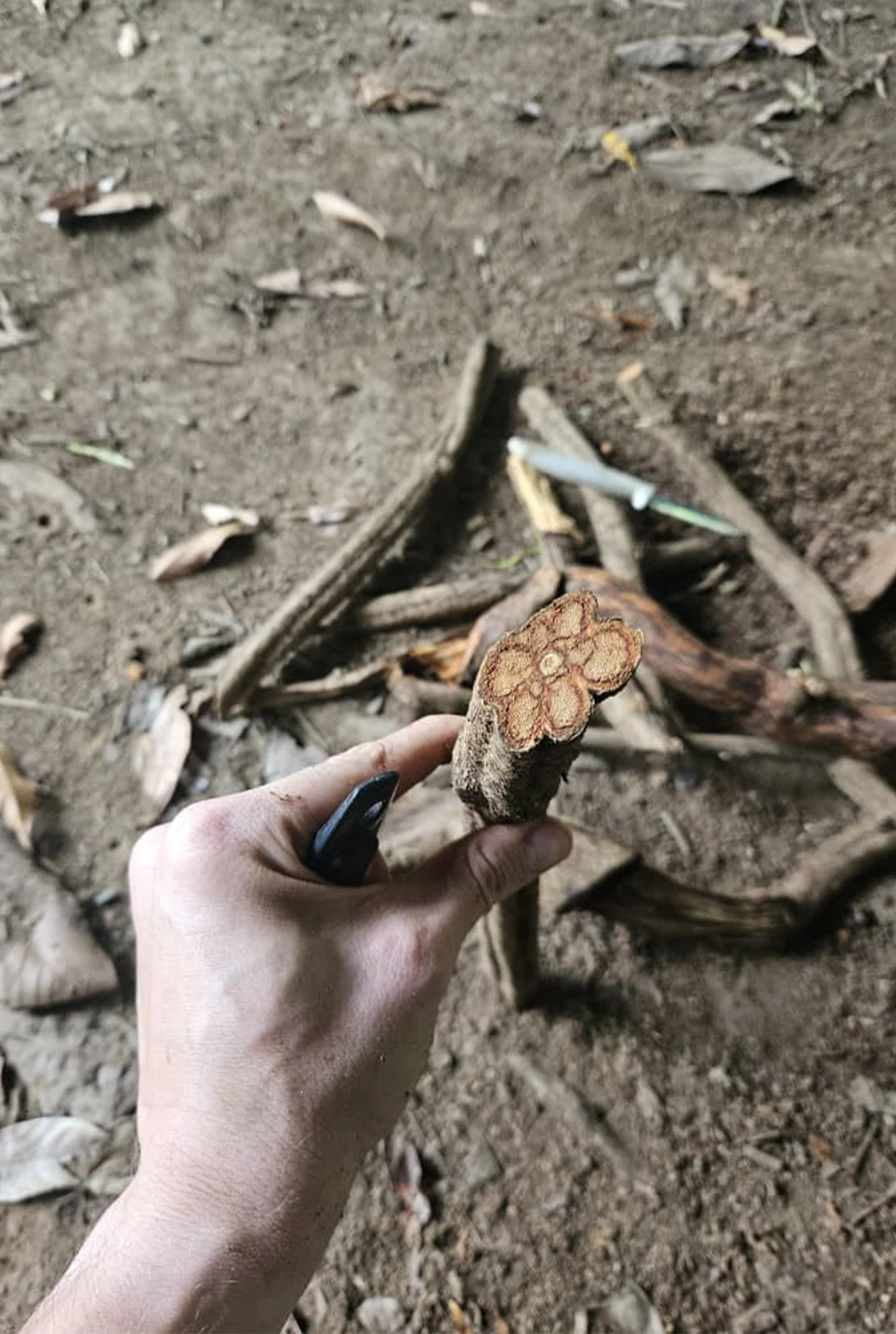
Understanding why ayahuasca carries specific risks requires understanding one mechanism. Everything else follows from it. The Banisteriopsis caapi vine contributes beta-carboline alkaloids — specifically harmine, harmaline, and tetrahydroharmine (THH) — to the brew. These act as reversible inhibitors of monoamine oxidase A (MAO-A), the enzyme responsible for breaking down serotonin, tyramine, dopamine, and related compounds in the digestive system and liver (Ruffell et al., 2020). With MAO-A temporarily disabled, anything that increases serotonin or cannot be processed by MAO-A accumulates in the body. At sufficient levels, this produces serotonin syndrome — a potentially serious medical emergency involving agitation, dangerously elevated body temperature, and rapid heart rate. Tyramine-rich foods follow the same logic: normally metabolised safely by MAO-A, they become dangerous when that enzyme is blocked (Malcolm and Thomas, 2022). This one mechanism explains the majority of the documented safety risks. It is why the contraindication list below is not speculation. It is pharmacology.Who Should Not Attend: Absolute Contraindications
There are conditions that make ayahuasca genuinely dangerous, and every serious provider screens for them.
The following are not cautions. They are contraindications. Attending ceremony with any of these present carries real and serious risk.Psychiatric Contraindications
Personal or family history of schizophrenia, psychosis, or bipolar disorder with psychotic or manic features. Ayahuasca can precipitate or exacerbate psychotic episodes in people with these vulnerabilities. Psychotic episodes associated with ayahuasca are rare overall, but in cases where they do occur, the person almost always had a pre-existing personal or family history of psychotic or manic disorders (dos Santos et al., 2017). Active suicidal ideation. Not a history of depression — which may actually benefit from plant medicine work in appropriate settings — but active suicidal ideation at the time of attendance. This requires stabilisation before any psychedelic work is appropriate (Rossi et al., 2023).Medical Contraindications
Pregnancy. A clear contraindication. Animal studies at doses approaching typical human ceremonial doses have shown dose-dependent embryolethality and fetal anomalies. The clinical guidance across all serious providers is consistent: do not attend ceremony while pregnant (Motta et al., 2018; Oliveira et al., 2010). Breastfeeding. The alkaloids cross into breast milk. Avoid entirely (White et al., 2024). Severe uncontrolled hypertension. Ayahuasca produces modest, transient increases in blood pressure in healthy individuals. In someone with severe or uncontrolled hypertension, even modest elevation carries clinical risk (Riba et al., 2003). Active epilepsy or seizure disorders. Seizures have been documented in a small percentage of adverse event reports. People with epilepsy or active seizure disorders should not attend (Heise and Brooks, 2017; ICEERS, 2019). Severe liver or kidney disease. The ayahuasca alkaloids are metabolised hepatically. Severe liver disease impairs this metabolism, which can extend and intensify the experience unpredictably (ICEERS, 2024). Active serious infections or tuberculosis. The immune system is already under significant load. Ceremony creates additional physiological stress. Attend after full recovery (ICEERS, 2019). If any of the above apply to your situation, the first step is a direct conversation with your healthcare provider and with us. Our discovery call is specifically where we work through these questions honestly, before any commitment is made.The Drug Interaction List: Complete and Explained
SSRIs are not a caution. They are a contraindication. The distinction matters.
Ayahuasca’s beta-carboline MAOIs create a well-defined interaction profile. The following are the documented dangerous combinations.Serotonergic Medications: The Highest Risk Category
SSRIs (fluoxetine, sertraline, escitalopram, paroxetine, citalopram) and SNRIs (venlafaxine, duloxetine): combining either with ayahuasca creates the conditions for serotonin syndrome via two simultaneous mechanisms. A documented case of serotonin syndrome from fluoxetine combined with ayahuasca exists in the literature (Ruffell et al., 2020; Callaway and Grob, 1998). MAOIs (phenelzine, tranylcypromine, selegiline): compounding inhibition with the beta-carbolines in the brew. Extremely dangerous combination. Full washout required (Malcolm and Thomas, 2022). Tricyclic antidepressants and trazodone: serotonergic and noradrenergic activity. Contraindicated (Malcolm and Thomas, 2022). Triptans (sumatriptan, zolmitriptan): used for migraines, these are serotonin receptor agonists. Contraindicated with ayahuasca (Malcolm and Thomas, 2022). St. John’s Wort: a herbal supplement with documented serotonin reuptake inhibition. Often overlooked because it is not a prescription medication. Contraindicated (ICEERS, 2019). 5-HTP and tryptophan supplements: direct serotonin precursors. Avoid for at least one week before ceremony (ICEERS, 2019).Other High-Risk Combinations
Lithium: used for bipolar disorder, lithium lowers the seizure threshold. Combined with ayahuasca, seizure risk increases substantially (Malcolm and Thomas, 2022). MDMA, amphetamines, cocaine: all increase monoamine activity. With MAO-A inhibited, these can produce hypertensive crises. Fatalities have been documented from harmala alkaloids combined with MDMA in recreational settings (Malcolm and Thomas, 2022). Dextromethorphan (found in many cough preparations): serotonergic. Contraindicated (Malcolm and Thomas, 2022). Linezolid and methadone: both carry significant interaction risk via serotonergic or cardiovascular mechanisms (Malcolm and Thomas, 2022).Substances Requiring Washout, Not Elimination
Benzodiazepines: not a contraindication in the same category, but benzodiazepine dependence and abrupt withdrawal can be destabilising in the context of ceremony. Discuss with your facilitator and your prescribing doctor. Cannabis: not an MAOI interaction risk, but cannabis significantly affects the quality of the ceremony and the body’s response. Stop at least one month before ceremony (ICEERS, 2019).Psychiatric Screening: What It Covers and Why
Psychiatric history doesn’t automatically disqualify someone. It changes how we approach the conversation.
Anxiety and depression are reasons many people come to ayahuasca. They are not reasons to exclude someone. Clinical trials have shown significant antidepressant effects from a single dose, including in treatment-resistant cases (Palhano-Fontes et al., 2019). Grief, chronic stress, and PTSD also appear in the profile of people who benefit from this work. The psychiatric conditions that do require exclusion are specific: a personal or family history of schizophrenia, schizophreniform disorder, or psychotic episodes. Bipolar disorder with a history of mania or psychotic features. Active suicidal ideation. These are not exclusions born from excessive caution. In the documented cases where ayahuasca has precipitated psychotic episodes, subjects had a personal or family history of psychotic or manic disorders in almost every instance (dos Santos et al., 2017). In one documented case study, a man with undiagnosed bipolar disorder developed a full manic episode meeting DSM-5 criteria within two days of a four-day ayahuasca ritual (Szmulewicz et al., 2015). The broader category of anxiety disorders — including generalised anxiety, social anxiety, and panic disorder — does not automatically disqualify someone. These conditions warrant honest conversation and careful preparation rather than blanket exclusion. The purpose of psychiatric screening is not to keep people away. It is to determine whether the medicine can work safely with what the person brings.Cardiovascular Considerations: The Specific Risks and Numbers
Ayahuasca produces modest, transient cardiovascular changes in healthy individuals. The word modest matters here.
The clearest data on ayahuasca’s cardiovascular effects comes from a double-blind placebo-controlled study. Peak systolic blood pressure increased by 13.8 mmHg above placebo at the highest dose. Heart rate increased by 9.2 beats per minute. Both measures resolved within four hours (Riba et al., 2003). In healthy individuals, these are transient and clinically unremarkable changes. In someone with pre-existing hypertension, arrhythmia, or recent cardiac events, the picture is different. The modest elevation in a compromised cardiovascular system is not modest in the same way. Tachycardia and hypertension are the most commonly reported cardiovascular effects in adverse event reports (Heise and Brooks, 2017). Cardiac arrest has been documented in a small number of cases, most involving polydrug use or pre-existing conditions. The practical guidance: anyone with a cardiovascular history requires medical clearance from a cardiologist before attending ceremony. A controlled blood pressure reading in a clinic is not the same as a blood pressure reading in the context of an intense psychedelic experience. Both matter. At MahaDevi, a registered nurse accompanies participants with a higher risk profile. If a participant is deemed not physically suitable to sit on a given night, they will not participate until adequate well-being is confirmed.Pregnancy, Lactation, and Fertility
Pregnancy is a clear contraindication. The animal data supports conservative caution and the clinical guidance is uniform.
Two independent animal studies have documented dose-dependent developmental toxicity from ayahuasca exposure during pregnancy. Oliveira et al. (2010) found visceral fetal changes at all treatment doses and skeletal changes at intermediate and high doses. Motta et al. (2018) found 44 to 52 percent maternal mortality at doses of four times the typical human ceremonial dose, with embryolethality and fetal anomalies at lower doses (Motta et al., 2018; Oliveira et al., 2010). No controlled human data on pregnancy outcomes exists, and the ethical barriers to generating it are significant. The conservative position — which is also the universal clinical position — is that ayahuasca is contraindicated during pregnancy. This is not cultural caution passed down from tradition. It is a position backed by the only available evidence. Breastfeeding: the alkaloids cross into breast milk. Avoid during the breastfeeding period. Fertility: no robust evidence of lasting effects on fertility exists in the research literature. If this is a concern for your specific situation, a conversation with a reproductive specialist is appropriate before any ceremonial involvement.What to Disclose: Why Honesty Is the Most Important Safety Measure
A provider who doesn’t ask about your medications in detail is not a safe provider.
The most preventable adverse events in ayahuasca ceremonies share a common cause: incomplete disclosure. Someone who did not mention the antidepressant they are still tapering. Someone who forgot to list the herbal supplement. Someone who was embarrassed about a psychiatric history and left it out. The screening process only works if the information going into it is complete. Before attending any ceremony, you should disclose: every medication you take, including supplements and herbal preparations; your full psychiatric history, including family history; any cardiovascular conditions; your history with substances; and your current mental and physical state. At MahaDevi, participants complete a medical questionnaire before the discovery call, and the call covers everything in that questionnaire in depth. A questionnaire alone is not sufficient to determine eligibility. The conversation is where we understand what the form cannot capture. On site, an informed participation form is signed in person on the first day of the retreat. This is not a waiver. It is a commitment to mutual honesty between the participant and the team holding the space. If a provider does not ask about your medications before you attend, treat that as a serious warning sign.MahaDevi’s Screening Process
Screening is not paperwork. It is how we determine whether this experience is right for you, and how we protect you if it is.
MahaDevi considers the ICEERS guidelines for participant screening as a reference point, while applying its own protocols shaped by years of facilitation experience and the specific context of the retreat. The process begins with a medical questionnaire on application. This covers the full contraindication list, medications, psychiatric history, cardiovascular conditions, substance use, and current health status. Following the questionnaire, every accepted applicant has a discovery call. This is where we go through everything the form captured and everything it did not. Some situations require follow-up conversation with our medical advisory team. On site, a registered nurse is available to accompany participants with a higher risk profile. Blood pressure, heart rate, and overall physical presentation can be assessed for those who warrant closer attention. If anything warrants concern on a given night, that participant does not sit in ceremony until we are satisfied with their state. MahaDevi works with a certified psychologist and psychiatrist who specialise in plant medicine. If something arises during a participant’s process — before, during, or after retreat — that requires their expertise, they are available. The retreat is located 30 minutes from Hospital José María Hernández, which provides emergency medical infrastructure when needed. Travel insurance covering emergency medical evacuation is strongly recommended for all participants.The Long-Term and Subtle Risks: What Happens After
The most common serious risks after ceremony are not acute. They arrive in how participants interpret and act on what they received.
The acute risk window of ayahuasca — the ceremony itself and the hours following — is well contained by proper screening and an attentive facilitation team. The longer-arc risks are less commonly discussed and worth naming. The first is dangerous interpretation. Some participants receive an insight in ceremony that feels absolutely certain: leave this job, end this relationship, stop this medication. The medicine can produce states of high clarity that feel like revelation. Some of them are. Some of them are projections or metaphors the mind has interpreted too literally. The instruction across all serious integration frameworks is consistent: sit with insights for weeks before acting on them. Discuss them with your facilitator. Share them with people who knew you before the ceremony. The clarity you feel in ceremony does not expire if you wait. The action that does not need to happen immediately can always happen later (Gorman et al., 2021). The second is the small percentage of people who experience lasting psychological difficulty after ceremony. A global survey of 6,877 ayahuasca drinkers found that adverse mental health effects in the weeks and months following use were reported by 55.9 percent of respondents. Approximately 88 percent of those viewed these effects as part of a positive growth process. A smaller number experienced genuine disruption. Non-supervised settings and pre-existing psychiatric conditions were the strongest predictors of adverse outcomes (Bouso et al., 2022). The quality of the integration support available after ceremony is not a bonus. It is part of the safety structure. MahaDevi’s 90-day integration protocol — including four structured follow-up calls and emergency one-on-one access throughout — exists precisely because the experience does not end when you leave the ceremonial space.Frequently Asked Questions
Ayahuasca Safety
- Is ayahuasca dangerous?
Ayahuasca is not dangerous for healthy people attending a well-screened, well-facilitated ceremony. It carries serious risks for specific populations: those taking serotonergic medications, those with a personal or family history of psychosis or bipolar disorder with mania, those with severe cardiovascular conditions, and those who are pregnant. The most preventable harms involve drug interactions, and those are avoidable with complete disclosure and proper screening. The evidence from a global survey of nearly 7,000 ayahuasca drinkers found that only 2.3 percent required subsequent medical attention after adverse acute effects (Bouso et al., 2022; White et al., 2024).
- What makes ayahuasca dangerous?
The primary danger mechanism is the MAOI activity of ayahuasca’s beta-carboline alkaloids. With monoamine oxidase A inhibited, serotonergic medications and tyramine-rich foods can accumulate to dangerous levels. The interactions most associated with serious adverse events are: SSRIs and SNRIs, MAOIs, lithium, MDMA, amphetamines, and dextromethorphan. The second danger mechanism is psychiatric vulnerability: ayahuasca can precipitate or exacerbate psychotic episodes in people with a history of psychosis or bipolar disorder with manic features. The third is the facilitation context: unsupervised or poorly facilitated settings are consistently associated with worse outcomes (Bouso et al., 2022; Malcolm and Thomas, 2018).
- Can you die from ayahuasca?
Fatalities directly attributable to ayahuasca alone are extremely rare. A review of US poison control data over ten years identified three fatalities among 531 ayahuasca exposure calls, though many of these cases involved polydrug use or pre-existing conditions rather than ayahuasca in isolation (Heise and Brooks, 2017). The risk of death from ayahuasca in a well-screened, properly facilitated ceremony in an otherwise healthy individual is very low. The risk increases substantially when the contraindications listed above are ignored, when dangerous drug combinations are present, or when participants have undisclosed cardiovascular or psychiatric conditions.
- Can you do ayahuasca if you have anxiety?
Anxiety, including generalized anxiety disorder, social anxiety, and panic disorder, is not an automatic contraindication for ayahuasca. Many people with anxiety-based conditions attend ceremony and benefit from it. The ceremony can surface anxiety acutely, which requires a skilled facilitation team to support. The relevant questions are: how severe and how managed is the anxiety; whether any medications being taken for anxiety carry interaction risk; and whether the person has the psychological stability to navigate a challenging experience. These are questions for an honest conversation with your facilitator and, where relevant, your treating clinician.
- Is ayahuasca safe for everyone?
No. Ayahuasca is not safe for people who are pregnant, taking serotonergic medications without washout, have a personal or family history of schizophrenia or psychosis, have bipolar disorder with a history of mania or psychotic features, have severe uncontrolled hypertension, have active epilepsy, or have serious liver or kidney disease. For everyone else, the evidence supports an acceptable safety profile in controlled settings with proper screening. The difference between a safe and an unsafe ayahuasca experience is largely determined by the screening process, the facilitation quality, and the honesty of the participant going into it (White et al., 2024; ICEERS, 2024). For those working through whether they are a suitable candidate for ceremony.
- What are the most common side effects of ayahuasca?
Nausea and vomiting are the most common effects, reported by nearly 70 percent of participants in a global survey (Bouso et al., 2022). In traditional Amazonian contexts, vomiting is understood as part of the medicine’s action, not a side effect to be managed. Less common but documented effects include transient anxiety, headaches, dizziness, and temporary increases in blood pressure and heart rate. In a small percentage of cases, more serious events have been reported, including chest pain, breathing difficulty, and seizures, most of which involved pre-existing conditions, concurrent substance use, or poorly facilitated settings (White et al., 2024).
Conclusion
The risk picture for ayahuasca is more precise than most guides suggest.
Ayahuasca is not globally dangerous, and it is not safe for everyone. It is well-characterised, pharmacologically understood, and manageable with the right screening. The contraindications are real and they exist for documented reasons. The drug interactions are serious and they are preventable. The facilitation quality matters as much as anything in the participant’s profile. If you fall outside the contraindication categories, have disclosed your full health history, and are attending with a provider who takes screening seriously, the evidence supports an acceptable safety profile. If you are unsure whether you fall within those categories, that uncertainty belongs in a conversation with your healthcare provider and with your facilitator before any commitment is made.References
Bouso JC, Dos Santos RG, Alcazar-Córcoles MA, Hallak JEC. (2022). Shedding light on the darkest experiences of ayahuasca drinkers: a global survey. Journal of Psychopharmacology, 36(12), 1338–1346. https://pmc.ncbi.nlm.nih.gov/articles/PMC10021266/
Callaway JC, Grob CS. (1998). Ayahuasca preparations and serotonin reuptake inhibitors: a potential combination for severe adverse interactions. Journal of Psychoactive Drugs, 30(4), 367–369. https://pubmed.ncbi.nlm.nih.gov/9924842/
dos Santos RG, Bouso JC, Hallak JEC. (2017). Ayahuasca, dimethyltryptamine, and psychosis: a systematic review of human studies. Therapeutic Advances in Psychopharmacology, 7(4), 141–157. https://pmc.ncbi.nlm.nih.gov/articles/PMC5433617/
Gorman I, Nielson EM, Molinar A, Cassidy K, Sabbagh J. (2021). Psychedelic harm reduction and integration: a transtheoretical model for clinical practice. Frontiers in Psychology, 12, 645246. https://pmc.ncbi.nlm.nih.gov/articles/PMC8008322/
Heise CW, Brooks DE. (2017). Ayahuasca exposure: descriptive analysis of calls to US poison control centers 2005–2015. Journal of Medical Toxicology, 13(3), 245–248. https://pmc.ncbi.nlm.nih.gov/articles/PMC5570722/
ICEERS (2019). Towards Better Ayahuasca Practices: A Guide for Organizers and Participants. International Center for Ethnobotanical Education, Research and Service. https://www.iceers.org/wp-content/uploads/2026/01/Guia-ayahuasca_eng_30.09.19.pdf
ICEERS (2024). Ayahuasca Safety Profile. International Center for Ethnobotanical Education, Research and Service. https://www.iceers.org/en/ayahuasca-safety-profile/
Malcolm B, Thomas K. (2022). Serotonin toxicity of serotonergic psychedelics. Psychopharmacology, 239(6), 1881–1891. https://doi.org/10.1007/s00213-021-05876-x
Motta SC, de Oliveira CR, Gobira PH, et al. (2018). Maternal and fetal toxicity of ayahuasca in Wistar rats. Birth Defects Research, 110(10), 863–869. https://pubmed.ncbi.nlm.nih.gov/29522798/
Oliveira CDR, Moreira DL, Kaplan MAC, Gattass CR. (2010). Developmental toxicity of ayahuasca in Wistar rats. Birth Defects Research Part B, 89(3), 207–212. https://pubmed.ncbi.nlm.nih.gov/20549682/
Palhano-Fontes F, Barreto D, Onias H, et al. (2019). Rapid antidepressant effects of the psychedelic ayahuasca in treatment-resistant depression: a randomized placebo-controlled trial. Psychological Medicine, 49(4), 655–663. https://pmc.ncbi.nlm.nih.gov/articles/PMC6378413/
Riba J, Rodriguez-Fornells A, Urbano G, et al. (2003). Subjective effects and tolerability of the South American psychoactive beverage ayahuasca in healthy volunteers. Psychopharmacology, 166(1), 85–95. https://pubmed.ncbi.nlm.nih.gov/12660312/
Rossi G, Vella V, Bersani FS, et al. (2023). Clinical guidelines for the administration of ayahuasca in research settings. Psychoactives, 2(4), 368–394. https://www.mdpi.com/2813-1851/2/4/24
Ruffell S, Netzband N, Bird CIV, et al. (2020). The pharmacological interaction of compounds in ayahuasca: a systematic review. Brazilian Journal of Psychiatry, 43(5), 559–570. https://pmc.ncbi.nlm.nih.gov/articles/PMC7678905/
Szmulewicz AG, Valerio MP, Smith JM. (2015). Switch to mania after ayahuasca consumption in a man with bipolar disorder: a case report. International Journal of Bipolar Disorders, 3, 4. https://pmc.ncbi.nlm.nih.gov/articles/PMC4338113/
White E, Kennedy T, Ruffell S, Perkins D, Sarris J. (2024). Ayahuasca and dimethyltryptamine adverse events and toxicity analysis: a systematic thematic review. International Journal of Toxicology, 43(3), 327–339. https://doi.org/10.1177/10915818241230916
