
Ayahuasca and Yagé:
Same Spirit. Different Worlds.
Ayahuasca yagé is the medicine of Colombia's Putumayo. The name changes at the border. The medicine does not. Yagé is what the Camsá, Inga, Siona, and Cofán peoples of Colombia's Putumayo and Sibundoy Valley have called this vine for as long as anyone can remember. What differs is not the plant. It is the ceremony, the companion plants, and the tradition holding the work.
New to this? Start with the free Ayahuasca Framework video course, or explore the Ayahuasca Hub and Plant Medicine Hub for deeper reading.
Ayahuasca and Yagé: Same Medicine, Same Spirit
Ayahuasca and yagé are the same sacred plant medicine. Same vine, same pharmacological mechanism, same spirit. The word you use says something about where you are and who taught you.
In Colombia, the medicine is called yagé or yajé. The word comes from the languages of the Siona, Camsá, Inga, and Cofán peoples who have carried this medicine for generations in the Putumayo lowlands and the Sibundoy Valley. Across the border in Peru, the Quechua word ayahuasca (vine of the soul) is what everyone uses. In Brazil it becomes daime or hoasca. The Shipibo call it Nishi. The Shuar of Ecuador call it natema.
Every name is a door into a different world. But the pharmacological engine underneath all of them is the same: Banisteriopsis caapi vine combined with a DMT-bearing admixture plant. The beta-carboline alkaloids in the vine disable MAO-A long enough for oral DMT to survive digestion and reach the brain. Remove the vine and nothing happens. Remove the admixture and you have only the vine. The partnership is what makes it work. (Egger et al., 2024)
In 2019, archaeologists analysing a 1,000-year-old shamanic bundle from Bolivia's Cueva del Chileno found both harmine and DMT present together as co-occurring compounds. The intentional combination of these alkaloids was already known and practiced a millennium ago. Sophisticated medicine preparation is not a modern discovery. It is the baseline. (Miller et al., 2019)
Colombia Uses a Different Plant and the Chemistry Is Measurable
Colombia does not just use a different name. It uses a different admixture plant alongside the vine, and the chemistry of that difference has been documented in laboratory analysis. This is one of the least-discussed distinctions between the Colombian and Peruvian traditions.
Chagropanga
Diplopterys cabrerana
The reference specimen that formally established Diplopterys cabrerana as a species was collected by Richard Evans Schultes from Colombia's Vaupés region, cementing chagropanga's Colombian provenance in the botanical literature. (Gates, 1982)
Chacruna
Psychotria viridis
Psychotria viridis is the dominant admixture in Peru, Brazil, and most international retreat contexts. Its availability and stability make it the globally common form.
These are not interchangeable plants. The DMT concentration in chagropanga is approximately 2.5 times higher by weight than in chacruna. This is not simply a claim that Colombian yagé is "stronger." The full experience depends on vine quality, preparation method, the healer's intent, and the ceremonial container. But the pharmacological profile is measurably different, and experienced drinkers consistently describe the character as distinct. (Chambers et al., 2020; Brito-da-Costa et al., 2020 ACS Omega)
The Four Tribes Who Carry Yagé
These are not different practices of the same tradition. They are four distinct ceremonial and cosmological systems that share a plant, a territory, and a history of survival. A note on language: the word people often reach for is shaman, but that word comes from the Tungus people of Siberia and has no meaningful connection to the Amazon. Here the healers are called Taitas, which means father in Quechua. It is not self-assigned. It is conferred by a community that has watched someone train across years, through direct experience, ceremony, and sustained accountability to the tradition that formed them.
Camsá (Kamentsá)
Sibundoy Valley, PutumayoThe Camsá speak a language isolate, unrelated to any other known language family. Their Taitas maintain yagé gardens of extraordinary botanical complexity and undergo multi-year initiations through successive visionary experiences under senior healers. Oral testimonies of Camsá elders document how yagé, the chagra garden, and storytelling form an inseparable fabric of identity and healing. (O'Brien, 2018; Agioutanti & Cortés, 2026)
Inga
Sibundoy Valley and Putumayo lowlandsThe Inga have served for centuries as botanical and ceremonial intermediaries between the Andean highland world and the Amazonian lowlands. It was an Inga spokesperson, Miguel Evanjuanoy Chindoy of UMIYAC, who co-authored the Lancet paper establishing the ethical principles that Western researchers must follow when approaching indigenous yagé medicine, including reverence, responsibility, and reparation. (Celidwen et al., 2022)
Siona
Putumayo lowlandsOne of the most extensively documented yagé traditions in academic literature, largely through fifty years of fieldwork by anthropologist E. Jean Langdon. When Siona practice appeared nearly extinct in the 1970s, it revitalized through engagement with indigenous identity movements. Contemporary Siona Taita Pablo Maniguaje-Yaiguaje has written publicly about yagé as an act of resistance against armed violence and petroleum extraction in Putumayo. The medicine and the land as one thing. (Langdon, 2016, 2017)
Cofán (A'i Kofán)
Colombia-Ecuador borderThe Cofán straddle the political line that the medicine itself does not recognize. Among the Cofán, the healer acquires power through years of surrender to nonhuman agents encountered in yagé. The Cofán have formally challenged organizations that claim their knowledge can legitimately be held outside proper lineage. Their territory spans a border drawn by others across a landscape that belongs to no nation. (Cepek, 2019; Jütte, 2018)
UMIYAC, the Union of Traditional Yagé Medics of the Colombian Amazon, formally unites these peoples around shared ceremonial practice. Colombia's Constitutional Court has recognized multiple Putumayo peoples as at risk of physical and cultural extermination. The ceremony itself is part of their answer to that threat. (Arsenault / UMIYAC, 2020)
You Are Looking for Ayahuasca. Colombia Is Where It Lives Best.
Most people searching for a retreat use the word ayahuasca. That is the right word. What you may not know yet is that the Colombian tradition, yagé, is where the most intact, least commercialized, and most botanically original form of this medicine still exists. Same spirit. Same vine. The difference is in how it is held, prepared, and who is holding it.
The most immediately distinctive element of a Colombian ceremony is the fire. The ceremony is organized around a sacred fire that burns throughout the night. Not ambiance. The center that holds everything, used for grounding, protection, and prayer. Specific songs, whistles, and ceremonial music serve simultaneously as protection, healing technology, and communal anchor. (García Molina, 2014)
Tobacco is central. Mapacho, sacred tobacco, is used throughout for protection and cleansing of the space. The Taita may also work with Agua Florida, rapé, and copal smoke to shift or steady what is moving in the room.
Music is communal. The Colombian ceremony moves between moments of deep internal work and moments of shared sound and presence. There is joy in it alongside the difficulty.
A survey of 2,751 ceremonial participants across three traditions found that ceremonial setting quality, especially leadership quality and social dimensions, significantly predicted the depth of mystical experience. The structure is not incidental. It is therapeutic. (Pontual et al., 2022)
Darkness and Ícaros
Complete darkness. Guidance through precise diagnostic healing songs called ícaros. Quiet, inward, and still.
Fire, Song, and Community
Sacred fire at the center. Participants may sit close to the fire or move into darkness. Singing, harmonica, and the chacapa weave through prayer and silence. Communal, grounded, and alive.
Standing Hymns
Highly structured, collective prescribed hymns sung standing in formation. Rhythm as the primary ceremonial guide.
Crudo and Cooked: Colombia's Unique Preparations
Most people who have worked with ayahuasca have only ever experienced the cooked preparation. Crudo is something else entirely, and it only exists here not because of a policy or a tradition of secrecy, but because of a simple geographic fact: it ferments within days and cannot be transported.
Cooked Yagé
Fire-brewed over many hours. The vine and chagropanga reduced together into a concentrated brew. Dense, bitter, physically demanding. The brew carries the quality of fire: transformation, intensity, and an experience that moves at its own pace. What most people encounter worldwide and when made fresh from plants at the source, it is as it was always meant to be served.
Crudo Cold Preparation
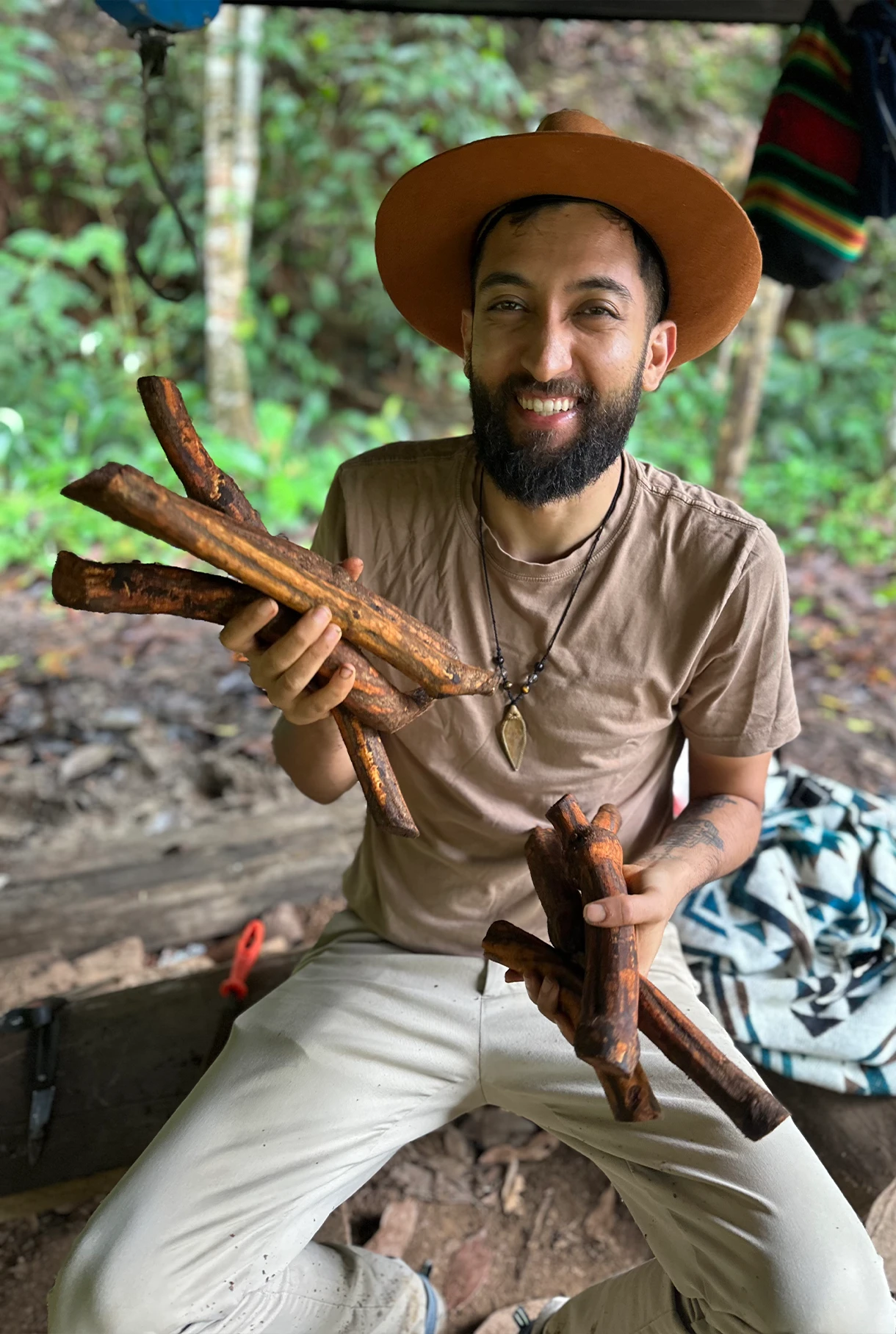
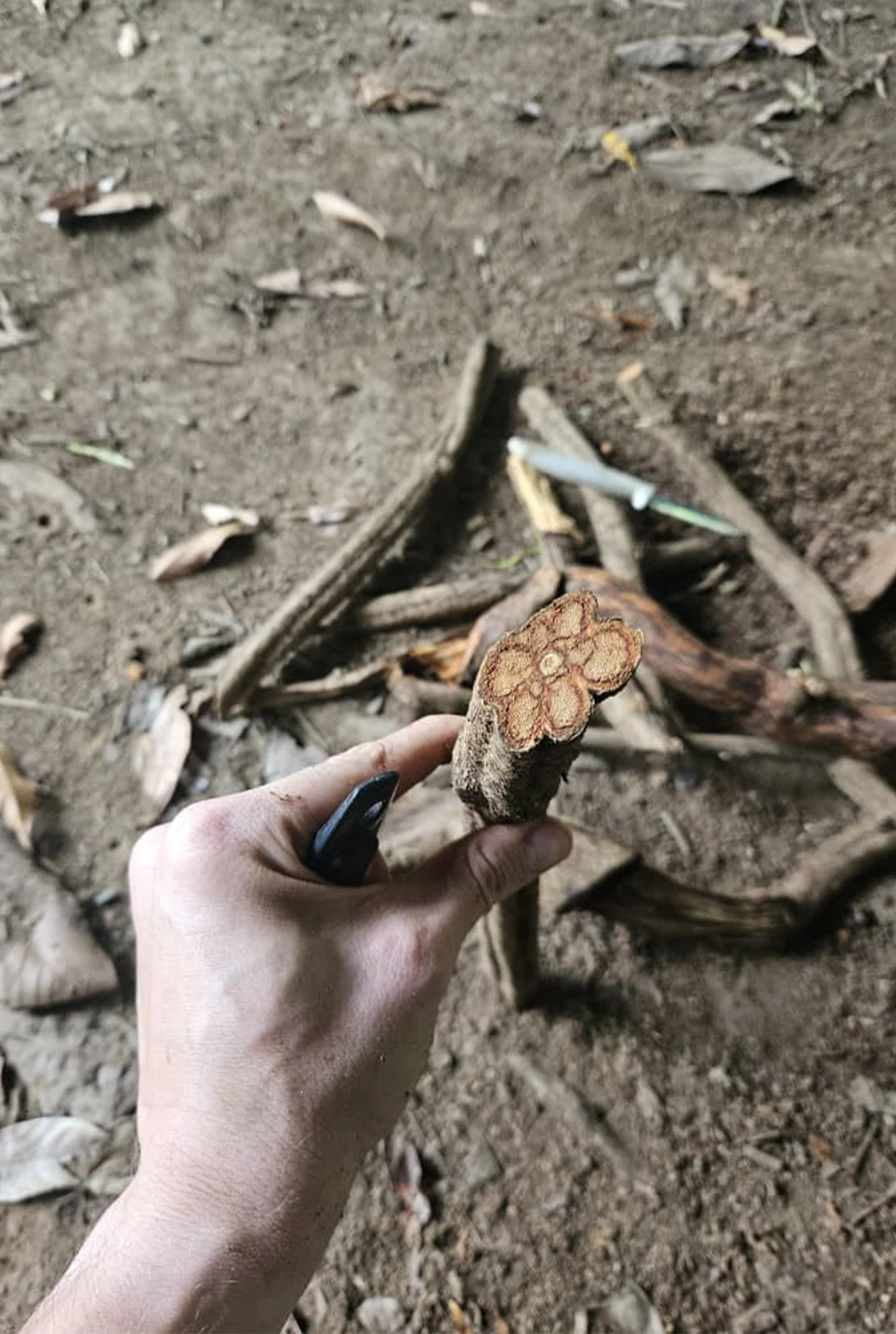
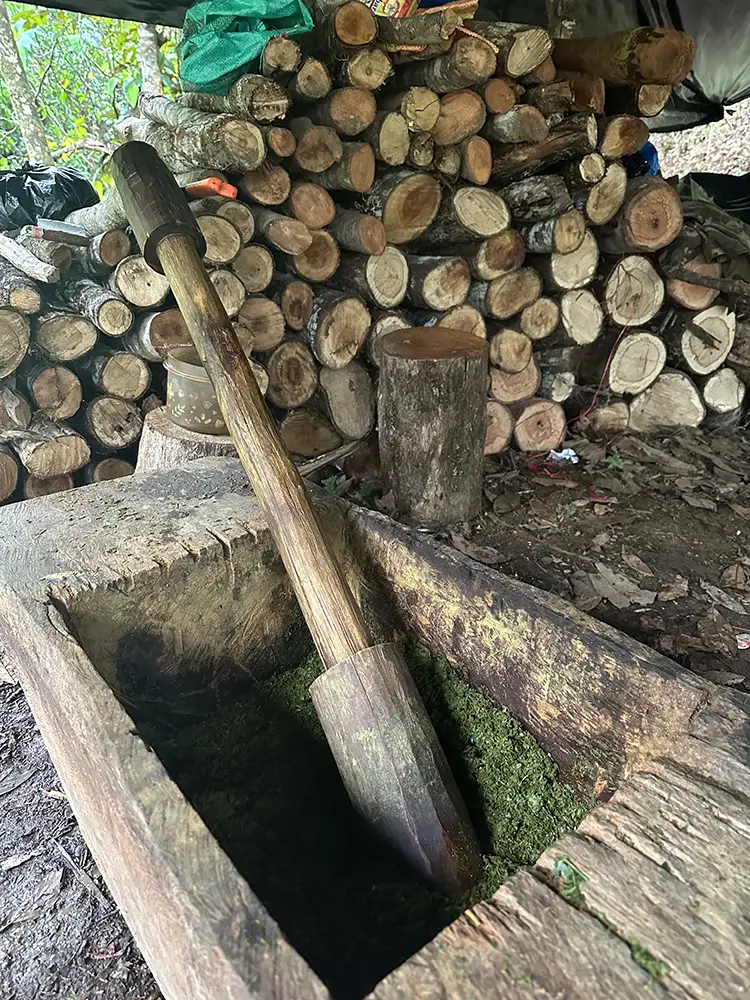
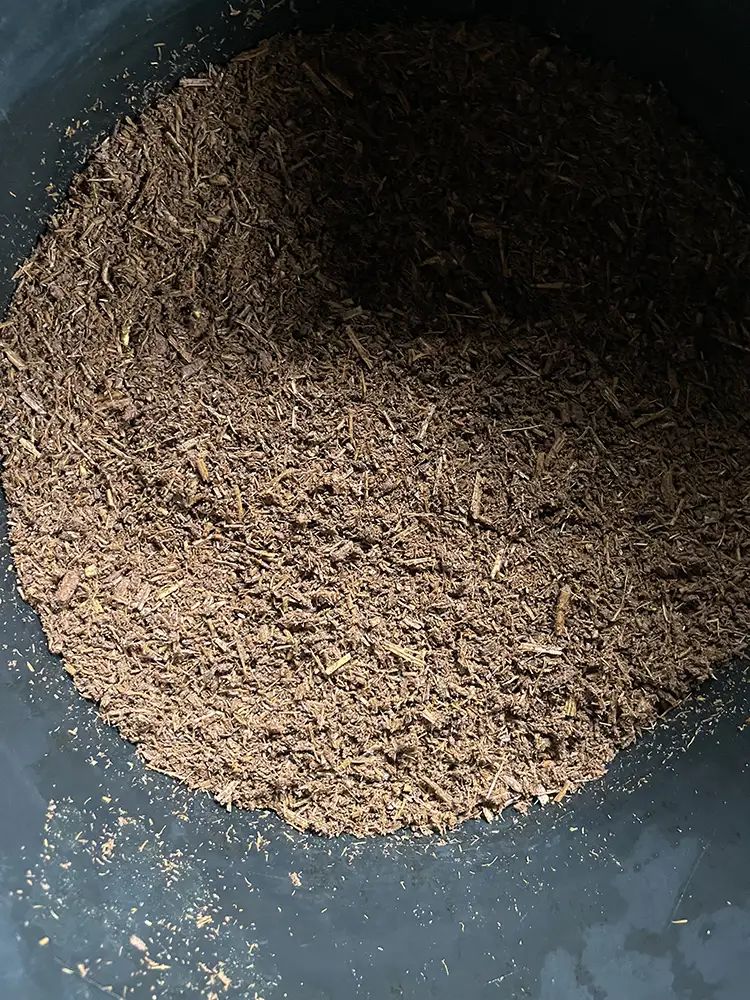
Prepared without fire. The vine is harvested, scraped by hand on stone, and processed fresh. The medicine is consumed within a day or two of preparation, before fermentation begins. The outer bark is scraped away to reveal the orange and amber interior where the medicine lives. This is done by hand, on stone, the same way it has been done in the Colombian Putumayo for generations. Lighter on digestion, milder in taste, and what many experienced practitioners describe as cleaner in quality.
| Aspect | Crudo (Cold Preparation) | Cooked Yagé |
|---|---|---|
| Preparation | No fire. Scraped and processed by hand. | Slow boiling over fire, many hours |
| Admixture plant | Chagropanga (Diplopterys cabrerana) | Chagropanga or Chacruna depending on tradition |
| Freshness | Must be consumed within days of preparation | Can be stored for longer periods |
| Taste | Mild, closer to water or vegetable juice | Bitter, dense, often difficult to drink |
| Effect on body | Lighter on digestion and stomach | Often heavier on digestion |
| Where it exists | Colombia only. Cannot be transported. | Available in retreat contexts worldwide |
| What leaves Colombia | Nothing. Must be drunk at the source. | Often exported as dried paste, then reconstituted with water |
| First-time participants | Often preferred for gentler entry | Common worldwide but can feel physically intense |
At MahaDevi, Taita Miguel grows and prepares both forms fresh from plants on his land in Putumayo. No paste, no importing, no reconstitution. The choice between them is made in consultation with him, based on each person's constitution and what the ceremony calls for.
We Do Not Use Paste Medicine. Everything Served at MahaDevi Is Fresh.
Most retreats outside the Amazon cannot offer fresh medicine. That is not a criticism of them. The plants do not grow there. What cannot be grown cannot be served fresh. This is where that changes.
Paste Medicine
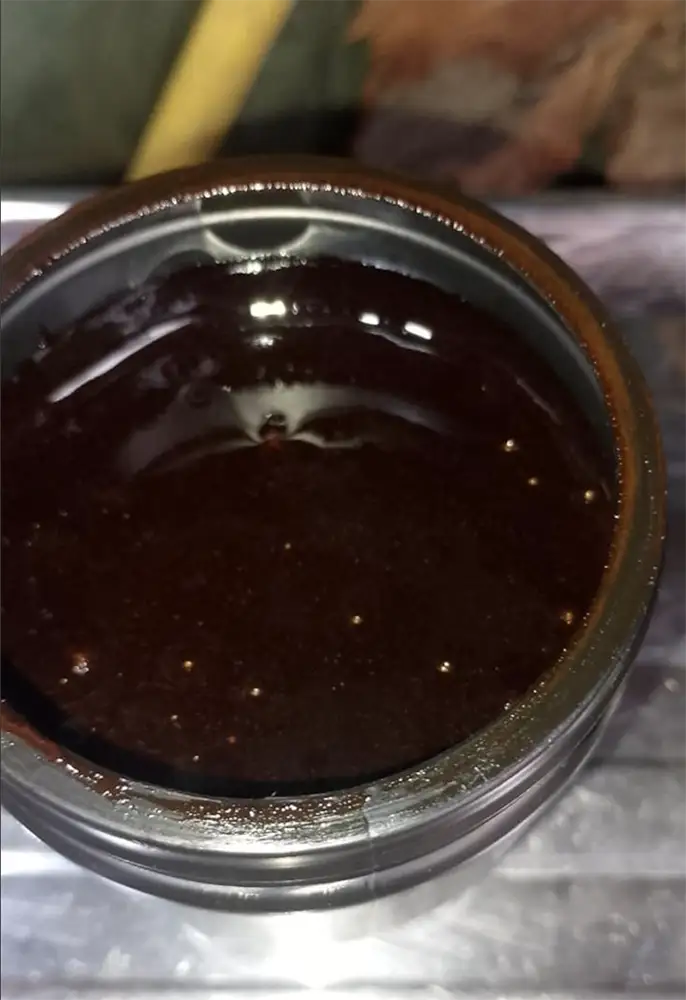
The plants do not grow outside the Amazon. To bring the medicine to California, Florida, or anywhere else, it must be cooked down into a thick concentrate, dried into paste, packaged, and shipped across international borders. Before the ceremony it is reconstituted with water.
Think of it like taking an exceptional wine, reducing it to a paste, shipping it across an ocean, and adding water before serving. The alcohol survives. What made it exceptional does not. The active compounds are there. The living quality, the freshness, and the care of a batch prepared for specific people at a specific time are gone.
What you receive is a standardized product. The same batch that went to three retreats before yours.

Fresh Medicine, Every Retreat
Taita Miguel grows the vine and admixture plants on his own land in Putumayo. Every batch is prepared fresh in the days before your retreat, for the specific group sitting with him. No paste, no importing, no reconstitution.
The preparation can be adjusted. The potency, the character, the proportion of vine to admixture. Every retreat is a living decision made by a healer who has worked with this plant his entire life and who knows the people sitting in the room that night.
This is what most people who have attended retreats outside the Amazon have never experienced. Not because it was hidden. Because it cannot exist anywhere else.
The preparation, step by step

Vine, fresh from the garden
Prepared by hand, fresh
Every batch made for you
See It Explained: Preparation and Lineage
Preparation method, freshness, and lineage are what truly shape the experience. In the video below, traditional perspectives on crudo and cooked ayahuasca are shared directly: why freshness matters, why lineage matters, and how the medicine moves differently depending on how it was made.
This is drawn from the Ayahuasca Framework, a free educational video course designed to help you understand the medicine before making any decisions about attending a retreat.
Taita Miguel and the MahaDevi Team
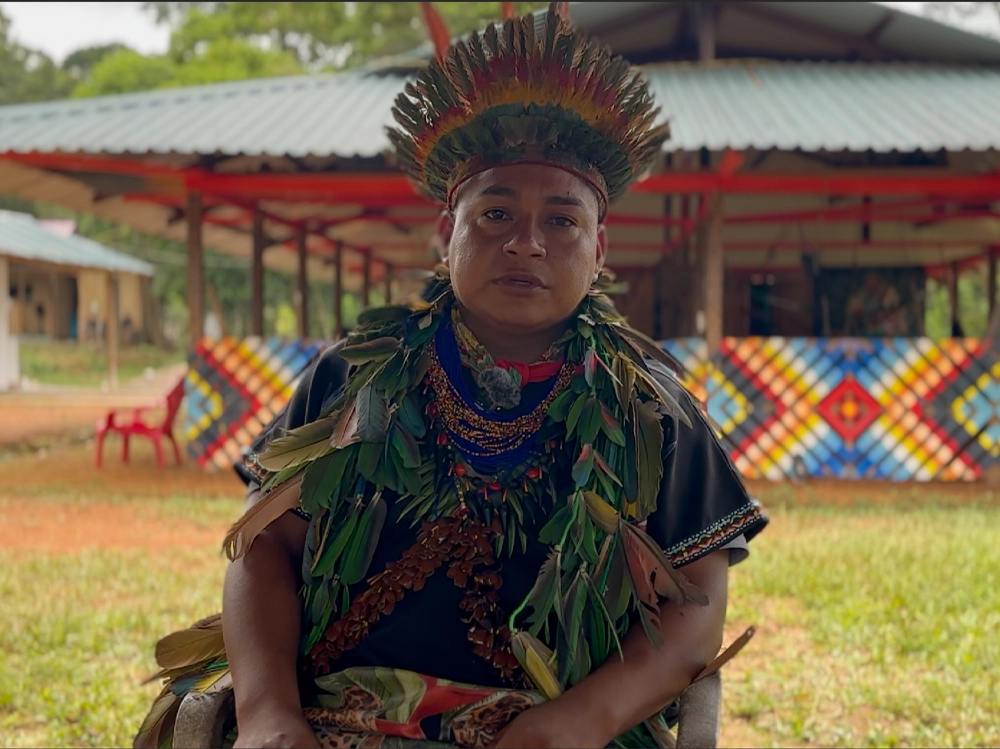
Ceremonies at MahaDevi are led by Taita Miguel Mavisoy of the Camsá tribe. He received yagé for the first time at six months old, guided by his parents, both established healers in the Camsá tradition. He was serving the medicine by age 14. His lineage runs across twelve unbroken generations. He was born near the Ecuadorian border and grew up in the communal life of his people. His wife is also a healer. They work together.
Taita Miguel has longstanding relationships with healers from the Inga, Siona, and Cofán traditions, communities he grew up alongside in Putumayo. For every two participants, one dedicated team member is present at ceremony.
The MahaDevi team includes facilitators with over 400 ceremonies of lived experience. A clinical psychologist and psychiatrist with plant medicine backgrounds are available when needed.
His kind demeanor and genuine openness to people from all over the world are as much a part of what he brings to ceremony as the yagé itself. He is known internationally for the notably sweet taste of his brew.
Common Questions
- Is yagé the same as ayahuasca?
- Yes. Yagé and ayahuasca are the same plant medicine, the same vine, the same pharmacological mechanism. The name changes at the border. In Colombia, the Camsá, Inga, Siona, and Cofán peoples call it yagé or yajé. What differs between regional traditions is the companion plant, the preparation method, and the ceremony holding the work.
- What is the difference between chagropanga and chacruna?
- These are the two main admixture plants used alongside the Banisteriopsis caapi vine. In Colombia, the traditional admixture is Diplopterys cabrerana, known locally as chagropanga or chaliponga. In Peru and Brazil, Psychotria viridis (chacruna) is most common. Chagropanga contains approximately 2.4 mg/g of DMT compared to 0.94 mg/g in chacruna, a measurably higher concentration that contributes to a distinctly different quality of experience. (Chambers et al., 2020; ACS Omega)
- What is the difference between crudo and cooked ayahuasca?
- Cooked ayahuasca is fire-brewed for many hours. Crudo is prepared without fire, using fresh plants processed cold and consumed within a day or two of harvesting. Crudo ferments quickly and cannot be stored or transported. It does not exist outside Colombia. Many practitioners find crudo lighter on the body and gentler in entry. At higher doses it is no less powerful than cooked medicine.
- Why do you say Taita instead of shaman?
- The word shaman comes from the Tungus people of Siberia and has no meaningful connection to the Amazon. Its widespread use is a misapplication born of Western anthropology, not something that originates in these traditions. Taita means father in Quechua and is the term used within the Colombian Indigenous tradition for a trained ceremonial healer. It is conferred by a community, not self-assigned.
- Is yagé legal in Colombia?
- Colombia has never prohibited yagé. There is no specific legislation restricting it, and the Colombian government has provided significant institutional support for its cultural significance in indigenous practice. Colombia holds the highest global prevalence of ayahuasca consumption of any country, approximately 0.8 percent of the population. (Suárez Álvarez & ICEERS, 2023)
- What are the four main Indigenous tribes associated with yagé in Colombia?
- The Camsá (Kamentsá) of the Sibundoy Valley, the Inga of the Sibundoy Valley and Putumayo lowlands, the Siona of the Putumayo lowlands, and the Cofán (A'i Kofán) whose territory spans the Colombia-Ecuador border. These are not different practices of the same tradition. They are four distinct ceremonial and cosmological systems that share a plant and a territory.
Experience Both Preparations at the Source
MahaDevi is one of the only retreat centers in Colombia offering both traditionally cooked Yagé and Crudo, prepared fresh for each retreat by Taita Miguel from plants grown on his own land in Putumayo. For those ready to work with the medicine the way it has always been held, this is where that happens.
Trusted by Seekers:
Real Ayahuasca Retreat Reviews
Read the honest experiences of those who found clarity and connection at MahaDevi. From the safety of our container to the depth of our integration support, discover why participants trust us with their journey.
An extraordinary and deeply rewarding journey. I'm so grateful my first experience was with MahaDevi. Ania and Yasha truly feel like family and created a space that felt like coming home.
 Brante
 My very first night of ceremony at MahaDevi was absolutely spectacular. Ania and Yasha created an unforgettable experience with breathtaking surroundings, incredible support, and powerful shamans. If you're on the fence, don't think twice, you won't regret it.
 Lester
 My first retreat with MahaDevi in July 2025 was truly transformative. Yasha and Ania went above and beyond to create a safe, supportive space with exceptional medicine, nourishing meals, and personalized care. From seamless travel to powerful ceremonies and ongoing integration, I felt held every step of the way.
 Chad
Chad An extraordinary and deeply rewarding journey. I'm so grateful my first experience was with MahaDevi. Ania and Yasha truly feel like family and created a space that felt like coming home.
Brante My very first night of ceremony at MahaDevi was absolutely spectacular. Ania and Yasha created an unforgettable experience with breathtaking surroundings, incredible support, and powerful shamans. If you're on the fence, don't think twice, you won't regret it.
Lester My first retreat with MahaDevi in July 2025 was truly transformative. Yasha and Ania went above and beyond to create a safe, supportive space with exceptional medicine, nourishing meals, and personalized care. From seamless travel to powerful ceremonies and ongoing integration, I felt held every step of the way.
Chad