Ethics Is Not a Policy.
It Is a Series of Daily Choices.
Who holds the ceremony. How they are compensated. What you are told before you arrive. What you are not promised. And what the community whose land and medicine you are visiting actually receives from your presence. This page explains how MahaDevi makes those choices and why.
Nothing About Us Without Us
The medicine does not belong to the retreat industry. It belongs to the indigenous peoples of the Colombian Amazon who developed it, protected it through colonization and armed conflict in the Putumayo, and preserved it through generations of persecution.
The principle the international indigenous rights community holds is simple: nothing about us without us. It means that any engagement with this medicine, ceremony, education, healing, retreat, should involve the people it belongs to, not just draw on their knowledge while they remain invisible or underpaid.
At MahaDevi, our ceremonies are indigenous-led. The healers we work with do not lend their presence to our program. They are the program. What they bring, the sacred songs, the prayers, the plant knowledge, the ceremony itself, is not something we have licensed or borrowed. It is the living tradition, present in its original form.
What UMIYAC Is and Why It Matters
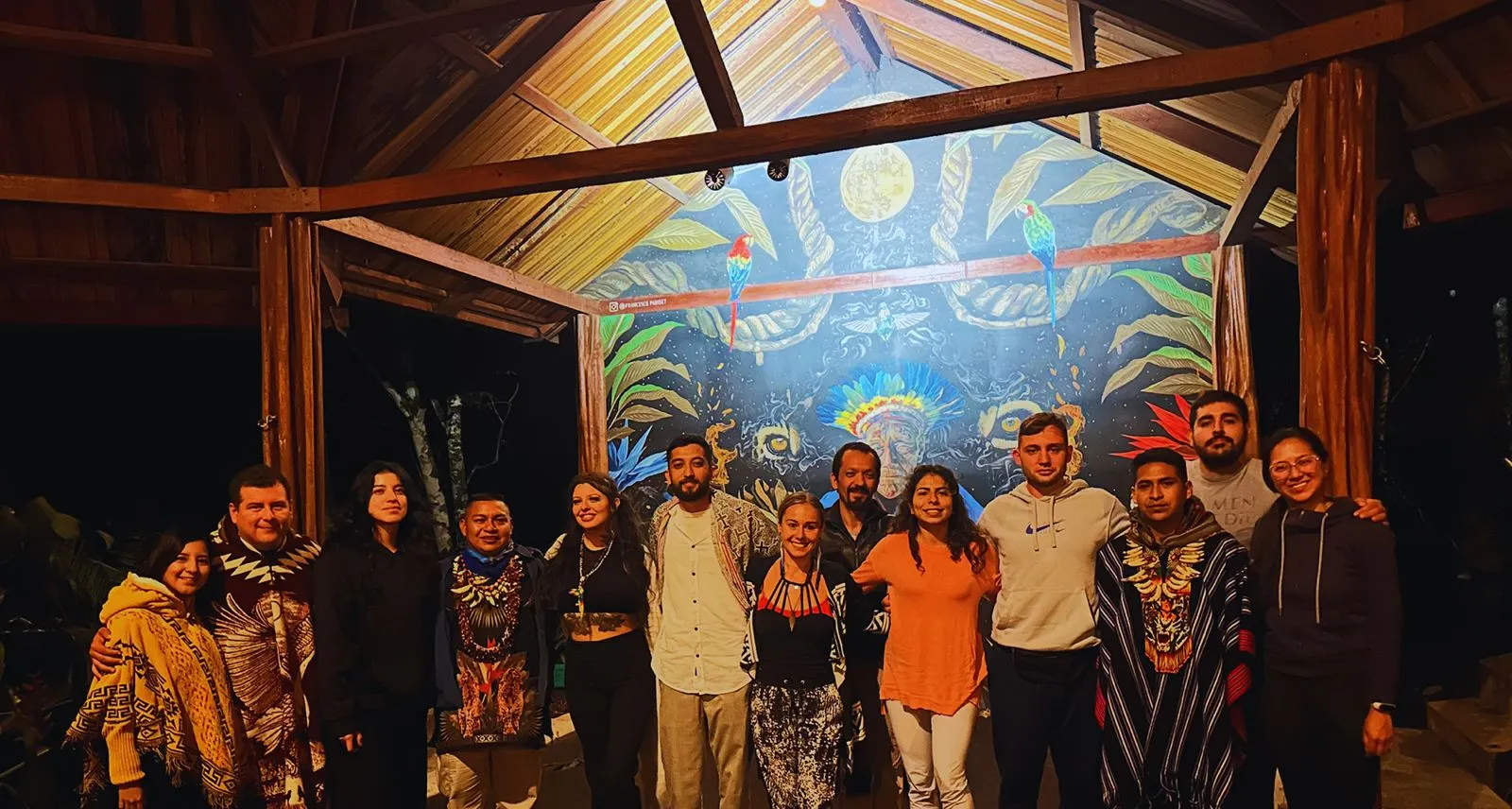
The Union of Traditional Yagé Medics of the Colombian Amazon unites five indigenous peoples, the Inga, Camsá, Siona, Cofán, and Coreguaje, around a shared assertion: yagé belongs to these peoples and these territories, and anyone engaging with it carries a responsibility to that fact.
Colombia's Constitutional Court has formally recognized all five of these groups as being at risk of physical and cultural extermination. UMIYAC's answer to that risk is, in part, the ceremony itself. Maintaining the tradition as a living practice is simultaneously cultural survival and territorial defense.
In 2022, UMIYAC spokesperson Miguel Evanjuanoy Chindoy, an Inga leader from the Putumayo and Sibundoy Valley, co-authored a paper in The Lancet establishing eight ethical principles for Western engagement with indigenous plant medicine. It was the first time a globally representative indigenous-led group had formally addressed the psychiatric and research community on this subject through peer-reviewed scholarship.
The Inga and Camsá are neighboring peoples of the Sibundoy Valley, bound by centuries of shared territory, ceremonial knowledge, and yagé tradition. The healers we work with at MahaDevi carry that same Sibundoy Valley lineage.
Five peoples. One tradition. One shared assertion. Yagé belongs to the land and the peoples who have carried it. Engagement with it is a responsibility, not a right.
Published in The Lancet Regional Health by a globally representative group of indigenous leaders and researchers. The eight principles established there are what we hold ourselves to. Read the paper.
The Eight Principles in Practice
The eight principles from the Lancet consensus are Reverence, Respect, Responsibility, Relevance, Regulation, Reparation, Restoration, and Reconciliation. Here is what each one means at MahaDevi, not in abstract terms but in practice.
Reverence
We hold the medicine as sacred. It is not a product, a treatment option, or a wellness experience. It is a living force that belongs to the land and the people who carry its knowledge.
Respect
We engage with indigenous healers and protocols as the foundation of everything we offer. This is not a partnership of convenience. It is the structure within which we operate.
Responsibility
We are accountable to the tradition, to our participants, and to the communities our healers come from. When something goes wrong, we do not disappear.
Relevance
What we offer is grounded in the specific traditions of the Colombian Putumayo and Sibundoy Valley. We do not offer a generic ayahuasca experience assembled from multiple traditions for market appeal.
Regulation
We work on ancestral land in Colombia, within the legal and cultural recognition Colombia extends to indigenous traditions. We do not operate in legal grey areas or export the medicine out of context.
Reparation
The healers, the local staff, and the people of Putumayo who make what we offer possible are paid fairly. The economic exchange of retreat work flows back to the people who hold the tradition. This is not optional.
Restoration
We support the preservation of plant knowledge, ceremonial practice, and the physical territory that makes this medicine possible. Our presence in Putumayo should make things better, not extract value and leave.
Reconciliation
We acknowledge the history of extraction, appropriation, and commercial harm done to indigenous plant medicine traditions. We try to operate differently. Not perfectly, but honestly, and with the kind of accountability that allows the tradition to hold us.
Fair Compensation and Community Prosperity
Fair compensation is not a value-add. It is a precondition for ethical operation.
The global ayahuasca retreat industry generates significant revenue. In too many cases, that revenue flows almost entirely to Western-owned retreat businesses while the indigenous healers who hold the ceremony receive a fraction of what the work is worth. The Lancet paper documented this directly: Western practitioners can earn up to $10,500 per service event while indigenous practitioners earn $2 to $150 for equivalent work. That gap is not incidental. It is a structural failure of the industry.
At MahaDevi, our healers are paid fairly. Our local staff, the people of the Putumayo who prepare the food, maintain the space, and support the ceremonies, are compensated with the dignity their work deserves.
Putumayo is one of the most underappreciated regions of Colombia. It carries extraordinary biodiversity, ancient culture, and a living tradition that the rest of the world is only beginning to understand. MahaDevi's mission is not only to offer safe and authentic plant medicine experiences. It is to contribute to the prosperity of the people of Putumayo, to create meaningful employment in the local economy, and to be a presence in this territory that leaves more than it takes.
The prosperity of our participants, our staff, and the communities of Putumayo and Colombia are not separate goals. They are part of the same intention.
Indigenous practitioners earn $2 to $150 for equivalent work. That gap is documented in a peer-reviewed Lancet paper co-authored by indigenous leaders. It is the gap we refuse to replicate.
Putumayo is an underappreciated gem. It holds some of the oldest and most intact yagé lineages in the world. MahaDevi intends to help the world understand that, and to ensure the people of Putumayo benefit from that recognition.
Informed Participation: Our Commitment to Honesty
We do not sell miracles. We do not promise healing. We do not tell you ayahuasca will fix what nothing else could.
We believe ayahuasca is a divine gift. We believe that with complete sincerity. And we also believe that presenting a sacred gift as a guaranteed cure is a form of disrespect to the medicine, to the tradition, and to you.
What we offer is an authentic ceremonial experience with genuine indigenous lineage, held in a container designed for safety, and supported before and after with the preparation and integration resources that make the difference between an experience and a lasting change.
Informed participation is central to our work. Every participant receives our Ayahuasca Guide before arriving. Our Pre-Retreat Preparation Guide covers dietary guidelines, substance protocols, medical contraindications, intention setting, and what to expect from ceremony. Our preparation resources, together with our Ayahuasca Hub, our Plant Medicine Hub, and our blog articles, cover the pharmacology, safety, tradition, and practice of ayahuasca in full.
Before you arrive, you speak with us. We hold a discovery call not because it is a sales conversation but because medical questionnaires alone are not sufficient to determine whether this experience is right for you at this moment in your life. We want to understand your situation. We want you to understand what you are entering. Your honesty in that conversation is the most important preparation you can do.
We believe deeply in integration. The ceremony is not the destination. It is a door. What you do with what you find on the other side is where the actual work happens. This is why we build a 90-day integration structure around every retreat, why a clinical psychologist and psychiatrist with plant medicine backgrounds are available when needed, and why our responsibility to you does not end when you leave Putumayo.
The Privilege and What It Asks of Us
When you drink in Putumayo with indigenous leaders, one thing becomes clear: you do not drink alone. You do something good for yourself, you do something good for others, and you are doing something for the world.
Indigenous people preserved this medicine for thousands of years. They endured persecution, colonization, armed conflict, and the quieter pressure of a world that wants their knowledge but not always their presence or their prosperity. They kept it alive anyway.
Today we have the privilege of using medicine they kept safe. At MahaDevi, we take that privilege seriously. It means paying people fairly. It means staying on the land where the medicine belongs. It means being honest about what we offer and what we do not. It means building something in the Putumayo that creates prosperity not only for participants who come from far away, but for the people who live here, work here, and carry this tradition forward.
This page is not a marketing document.
It is our word.
Common Questions
- What is UMIYAC?
- UMIYAC is the Union of Traditional Yagé Medics of the Colombian Amazon. It formally unites five indigenous peoples of the Putumayo and surrounding Amazon region around the protection of the yagé tradition and the territories it belongs to.
- Who are the healers at MahaDevi?
- Our ceremonies are led by Taita Miguel, a Camsá healer from the Sibundoy Valley in the Colombian Putumayo. The Camsá and Inga peoples of the Sibundoy Valley share centuries of ceremonial knowledge and are among the most respected yagé lineages in the Colombian Amazon.
- What does fair compensation mean in practice?
- It means our healers and local staff are paid well for their work, that the economic value of the retreat experience flows back to the people who make it possible, and that MahaDevi's presence in Putumayo contributes to the local economy rather than extracting from it.
- Do you offer guarantees about healing outcomes?
- No. We do not sell miracles or promise specific results. We offer an authentic ceremonial experience held with care, safety, and genuine indigenous lineage. What happens in the ceremony and how you work with it afterward is yours. We support that work as fully as we can.
- What is informed participation?
- Informed participation means you arrive knowing what ayahuasca is, what the risks and contraindications are, what the preparation requires, and what your responsibilities are as a participant. We provide all of this through our guide documents, preparation resources, and discovery call before you arrive.
- How does MahaDevi support the communities of Putumayo?
- Through fair compensation to healers and staff, local employment, and a commitment to building a retreat presence that contributes to rather than extracts from the region. Putumayo is an underappreciated gem and we intend to help the world understand that.
- Where can I read the Lancet paper on indigenous ethics in psychedelic practice?
- Here: Celidwen et al. (2022), The Lancet Regional Health.
If This Is What You Are Looking For, Let Us Talk.
A retreat at MahaDevi begins with a genuine conversation. No pressure. No promises. Just honesty on both sides.