
Rapé (Hapé): What It Is, What It Does and What You Need to Know
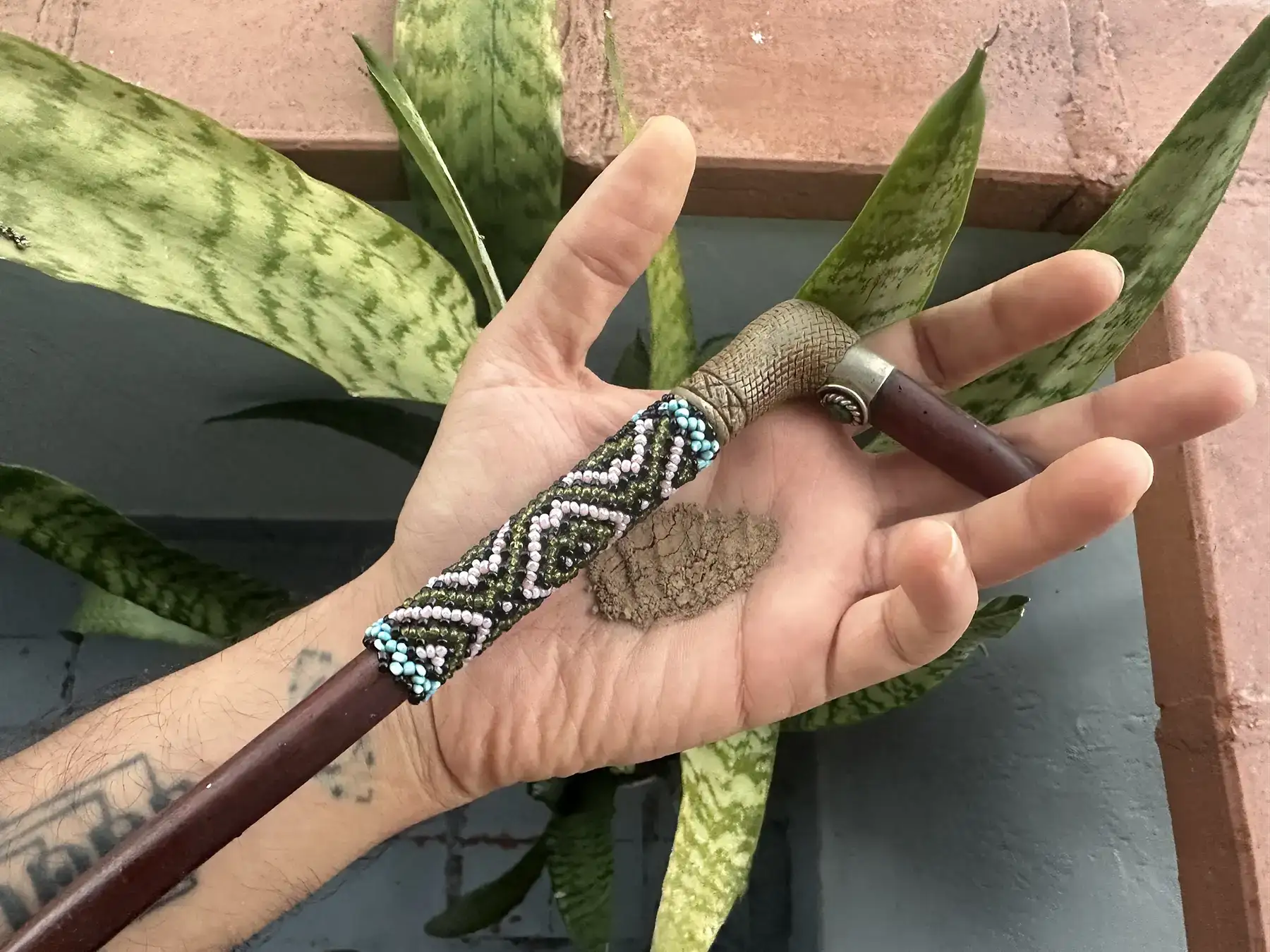
| Rapé / Hapé | Quick Facts | |
|---|---|---|
| Pronounced | ha-pay | From Portuguese rapé = snuff |
| Also written | Hapé, hape, rapeh, rapéh, rappe | All the same medicine |
| Base plant | Nicotiana rustica (mapacho) | Stronger alkaloid profile than commercial tobacco |
| Nicotine range | 6.32 to 47.6 mg/g | Stanfill et al. 2015, CDC/PMC5704902 |
| Legal status (US) | Legal, regulated as tobacco product | Not DEA-scheduled. Adults 18+ only. |
What Does Rapé Mean? Definition, Pronunciation and Spelling
Rapé is not a drug in the recreational sense. It is a plant medicine with a precise ritual purpose, a specific method of preparation, and centuries of indigenous use behind it.
Rapé is pronounced ha-pay. The word is Portuguese for snuff, and that is the complete answer to what rapé means at its most literal level. In the context of Amazonian indigenous tradition, however, the meaning runs considerably deeper than the etymology. What is rapé used for? At its core, rapé is a tool for grounding, mental clarity, energetic cleansing, and ceremonial healing. People come to it through plant medicine ceremony, meditation practice, stress management, or curiosity about indigenous traditions. What draws people across these different contexts is consistent: rapé offers a quality of presence and inner stillness that is genuinely difficult to reach through other means. It can also serve as a tool for self-discovery and emotional release when worked with respectfully. The spelling situation reflects the word’s journey. Rapé is the Portuguese original. Hapé is the most common alternative English spelling, arising from how the word sounds when spoken. Other variants, hape, rapeh, rapéh, rappe, emerged from phonetic transliteration across dozens of indigenous language communities. None of them is incorrect. They all point to the same medicine. Different tribal traditions produce their own distinct rapé blends, each with specific botanical ingredients, ceremonial purposes, and effects. The Yawanawá, Huni Kuin, Katukina, and Nukini peoples of the Brazilian Amazon are among the primary stewards of this knowledge. A full comparison of the different types of rapé is included in Section 8. One distinction worth establishing here: rapé is not a psychedelic. It does not produce visions and does not contain DMT. It is categorically different from ayahuasca, though the two are often used together in plant medicine ceremony. That relationship is covered in the ceremony section.Origins and History: Where Does Rapé Come From?
Tobacco was not something Amazonian peoples discovered. It was something they cultivated, refined, and built a cosmology around, and rapé is one of the most sophisticated expressions of that relationship.
Johannes Wilbert, whose 1987 monograph Tobacco and Shamanism in South America (Yale University Press) remains the definitive academic study of the subject, documents tobacco as the most important shamanic plant across virtually all lowland Amazonian indigenous groups (Wilbert, 1987). Friar Ramón Pané’s 1493 account provides one of the earliest European written records of indigenous tobacco snuff use in the Americas (Charlton, 2004). The practice itself predates those records by centuries. The heartland of rapé culture is the state of Acre in western Brazil, where tribes including the Yawanawá, Huni Kuin, Katukina, and Nukini developed their own distinct preparations, rituals, and relationships with the medicine (Wilbert, 1987). There is a story some elders tell connecting rapé to terra preta, the extraordinarily fertile black earth found throughout the Amazon, formed over centuries through the deliberate burning of organic matter. The ash in rapé follows the same logic: specific plants are burned, and the resulting alkaline ash does specific chemical work inside the medicine. This is not folklore. It is applied indigenous chemistry, and it aligns precisely with what modern analysis has confirmed about how ash pH affects nicotine bioavailability in the final preparation (Stanfill et al., 2015; de Smet, 1985). In the 1990s, following decades of displacement and cultural suppression, indigenous communities in Acre began a deliberate revival of traditional practices, including rapé preparation. The craft of feitio, the ritual production process, was passed from elders to younger generations as an act of cultural recovery. That revival is the direct context for the global spread of rapé in the decades since. What reaches plant medicine ceremonies and ayahuasca retreats today comes from that lineage.What Is Rapé Made Of? Ingredients and Preparation
Two components. Everything else depends on what they are and how they are combined.
Rapé has two core components: a tobacco base and a plant ash. The tobacco is almost always mapacho, the Amazonian name for Nicotiana rustica, and the ash comes from specific sacred trees. Tsunu (Platycyamus regnellii), Cumaru (Dipteryx odorata), and Murici (Byrsonima crassifolia) are among the most widely used. Why mapacho rather than commercial tobacco? Because they are fundamentally different plants. Nicotiana rustica carries significantly higher nicotine concentrations than the Nicotiana tabacum used in cigarettes, along with a distinct alkaloid profile that includes harman, norharman, and beta-carboline compounds (Stanfill et al., 2015). These beta-carbolines function as mild monoamine oxidase inhibitors (MAO-I), they do not produce psychedelic effects independently, but they may contribute to the particular quality of the hapé experience that practitioners describe as different from other forms of nicotine. The numbers from the only peer-reviewed chemical analysis of rapé (Stanfill et al., 2015, CDC/PMC5704902) are specific: nicotine content across 14 rapé products ranged from 6.32 to 47.6 mg/g. Most products tested were mildly acidic (pH 5.17 to 6.23), but alkaline formulations delivered substantially higher levels of free-base nicotine. At pH above 8, 98 to 99 percent of nicotine remains in its un-ionized form, the form that crosses biological membranes efficiently (Stanfill et al., 2015). This is the chemistry behind why tribal rapé can feel dramatically more potent than commercially sourced products at equivalent doses. The ash is not simply a ritual ingredient. It is a pH modulator with measurable pharmacological consequences. The same study identified tobacco-specific nitrosamines (TSNAs) at 0.07 to 6.41 micrograms per gram, and polycyclic aromatic hydrocarbons (PAHs) at 0.56 to 35.3 nanograms per gram, the carcinogen classes associated with smokeless tobacco use generally (Stanfill et al., 2015; WHO IARC, 2007). Beyond tobacco and ash, individual blends incorporate additional botanicals specific to each tribal tradition: seeds, barks, leaves, and roots selected by the healer for their intended ceremonial purpose. The specific plant combinations are lineage knowledge. The preparation process is called feitio. It involves drying and curing the tobacco, burning the ash plants at specific stages, grinding everything together through a ritual process, and sieving the final powder to approximately 125 microns. Experienced practitioners describe feitio as taking days, conducted with prayer and intention built into every stage. The process is as much ceremony as craft. One notable exception: the Apurinã people produce a blend called Verde or Awiry that contains no tobacco and no ash, made from specific botanicals by women within that tradition. It is the outlier within the rapé category and does not follow the standard two-component structure.Rapé Ceremony and How Hapé Is Administered
The pipe is not the ceremony. The intention held before, during, and after is.
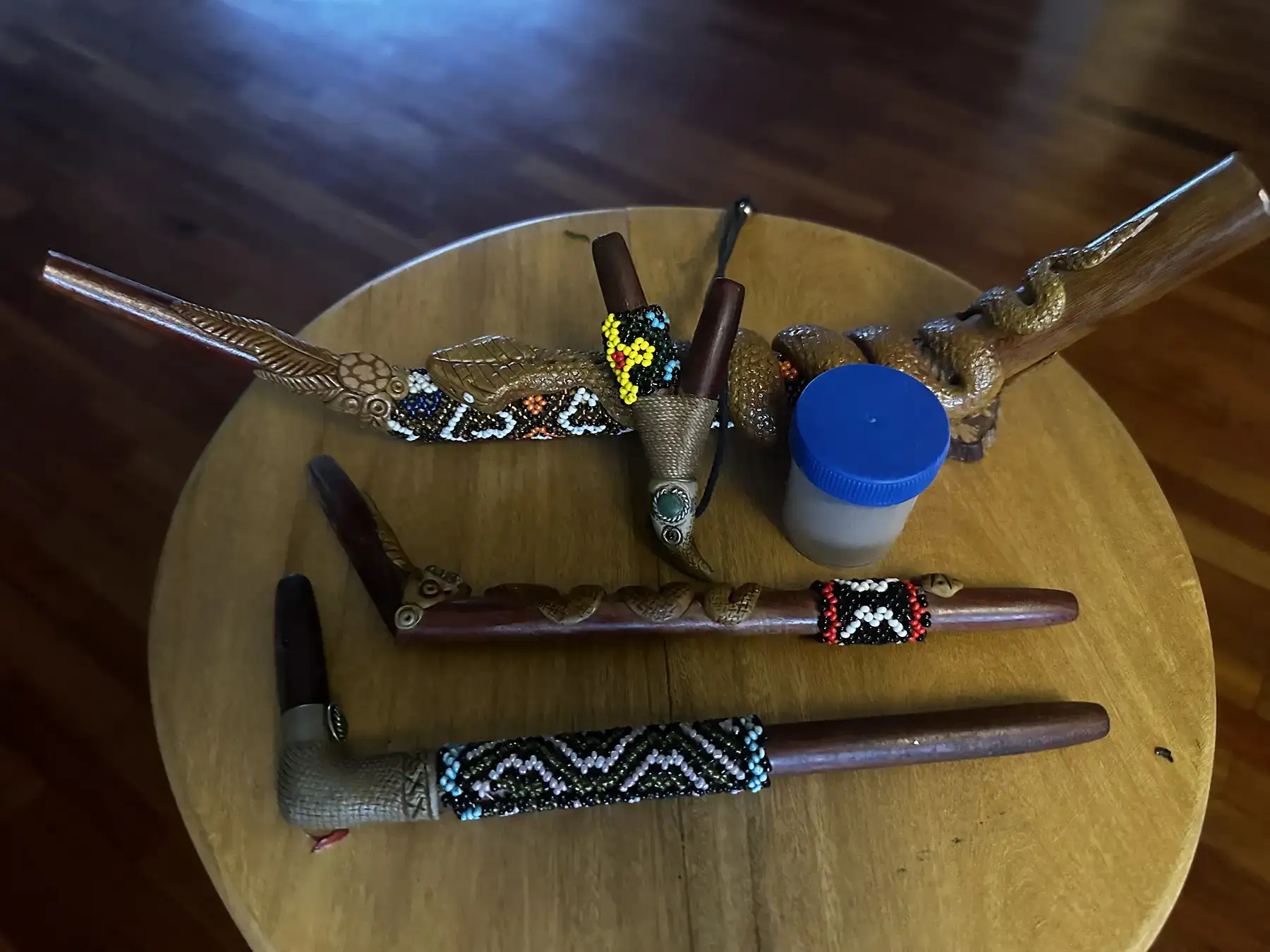
A basic rapé ceremony sequence:
- Settle into a quiet space and sit comfortably, back upright, either cross-legged or in a chair.
- Set a clear intention. This is not ceremonial decoration. What are you bringing to the medicine, and what are you asking for?
- Take a few slow, deep breaths and arrive fully in the body before proceeding.
- Administer a small, pea-sized amount into the left nostril first, breathing out through the mouth immediately after to prevent the powder travelling deeper than intended.
- Sit with whatever arises. The medicine asks for presence, not analysis. Feel rather than interpret.
- Repeat in the right nostril when you are ready.
- After both nostrils, breathe through the mouth and allow the experience to settle. The initial intensity typically peaks within two to five minutes.
Rapé Effects: What Does Hapé Do?
Rapé does not expand the mind the way ayahuasca does. It returns you to the body, and for many people, that is precisely what is needed.
Three domains of effect are consistently reported across practitioners and emerging clinical literature: physical, mental, and spiritual. They do not arrive separately. They are aspects of the same experience, shaped significantly by the blend, the dose, the setting, and the intention held.| Domain | What Rapé Does | Underlying Mechanism |
|---|---|---|
| Mental clarity | Rapid reduction in mental noise, improved focus, thought slows down | Nicotine triggers epinephrine, acetylcholine, and dopamine release |
| Grounding | Return to the body, presence, stillness after intensity | Somatic engagement through administration; physical sensation demands presence |
| Energetic clearing | Release of heaviness, panema, stuck emotional weight | Ceremonial context combined with purging as physical and energetic release |
| Self-discovery | Surfacing of suppressed material, emotional reset, insight | Reduced cognitive filtering under nicotinic and beta-carboline activity |
| Strength | Heightened alertness, physical vitality, ceremony readiness | Sympathoadrenal activation, dopamine and epinephrine response |
| Physical | Sinus clearing, nasal opening, mucus release, purging in some | Direct mucosal contact; nicotine’s bronchial and nasal effects |
Physical effects
The first response to rapé is nasal: the sinuses open, the eyes water, and mucus releases within minutes of administration. For those who carry chronic sinus congestion or tension, this clearing alone can be significant. At the pharmacological level, the nicotine in rapé triggers the release of epinephrine, acetylcholine, and dopamine in the central nervous system, the neurotransmitter cascades involved in alertness, arousal, and focus (Domino et al., 2000; Cryer, 1976). The beta-carboline alkaloids harman and norharman present in mapacho show mild monoamine oxidase inhibitory activity in laboratory conditions (Herraiz et al., 2005), which may contribute to the quality of the hapé experience that distinguishes it from other nicotine delivery methods. Pavia et al. (2000) documented antibacterial properties of nicotine compounds in laboratory conditions, consistent with traditional Amazonian use of mapacho tobacco as a topical and respiratory medicine (Berlowitz et al., 2020). Purging, nausea, vomiting, or strong mucus release, is common, particularly with stronger blends or at higher doses. Traditional Amazonian healing frameworks treat this as a cleansing: the body releasing what it has been holding.Mental effects
Practitioners consistently describe a rapid and distinctive shift in mental state: thought slows, mental noise quiets, and a quality of presence arrives. The mind stops running. This is partly pharmacological. Nicotine acts on nicotinic acetylcholine receptors and produces genuine cognitive effects including improved attention and reduced mental fatigue, effects that are dose-dependent and context-dependent. It is also structural. The physical intensity of rapé administration demands full presence. There is no room for distraction. The body arrives in the moment whether or not the mind intended to. A clinical field study by Berlowitz et al. (2024, N=27) examining traditional Amazonian tobacco ceremony found statistically significant reductions in perceived stress (PSS-10, Cohen’s d = 1.73), depression (PHQ-9), and anxiety (GAD-7) following ceremonial use, with large effect sizes sustained at follow-up. This was ceremonial tobacco broadly rather than rapé specifically, but it represents the beginning of a clinical evidence base for what practitioners have described for generations.Spiritual effects
In indigenous frameworks, the spiritual effects are not metaphorical. The experience is understood as direct contact with the medicine’s intelligence and with the tradition behind it. Panema is the Amazonian concept of energetic heaviness, the accumulated weight of unresolved experiences, fear, or spiritual stagnation. Rapé ceremony is traditionally understood as a tool for clearing panema, releasing what is stuck, and restoring the person to clarity and vitality. These interpretations are part of the indigenous framework and deserve to be stated plainly rather than translated into clinical language that strips them of meaning. Whether or not you hold the same cosmology, understanding what rapé is understood to do within its own tradition informs how you receive it.Is Rapé Safe? Side Effects, Risks and Who Should Avoid Hapé
The most common harm from rapé is not a single ceremony. It is the gradual drift toward habitual use where the medicine stops being a teacher and becomes a numbing agent.
Common effects (expected, not alarming):
- Intense nasal sensation, burning, or pressure in the minutes following administration
- Tearing, mucus discharge, or nasal release
- Nausea or vomiting, particularly with stronger blends or when the body is holding significant tension
- Brief dizziness or light-headedness at higher doses
- Sweating or elevated heart rate during peak effect
Documented risks:
Nicotine transiently raises blood pressure and heart rate. This is well-established (Wolk et al., 2005). For healthy adults in appropriate ceremonial settings, this is a transient and self-resolving effect. For individuals with cardiovascular disease or hypertension, it is a meaningful contraindication. Stanfill et al. (2015) identified tobacco-specific nitrosamines (TSNAs) and polycyclic aromatic hydrocarbons (PAHs) in rapé products at measurable concentrations. The WHO International Agency for Research on Cancer classifies these compound classes as carcinogenic in smokeless tobacco products (WHO IARC, 2007). Exposure frequency matters significantly: occasional ceremonial use represents a different risk profile than regular or daily use.On rapé and attachment:
This is worth naming directly because it is common, particularly among people who are new to the medicine. In the early stages of working with rapé, some individuals develop a pattern of frequent or daily use, drawn to the mental clarity and stress relief it reliably delivers. The medicine offers a real and repeatable effect, and for people carrying significant mental load, that can become compelling quickly. This is not identical to nicotine addiction in the clinical sense, though nicotine dependency is a genuine possibility with sustained heavy use (Stanfill et al., 2015). What practitioners describe more often is a psychological reliance on the medicine to achieve a state that, over time and with practice, can be reached through other means. Using hapé for habitual stress relief, without intention or ceremony, is a different relationship from the one the medicine is built for. The path back is usually the same: a period of not using rapé, followed by a more deliberate re-engagement. Not avoidance, but a reset of the relationship. The medicine is approached as something with intelligence rather than as a substance that numbs. Intention and setting carry real weight. Before each use, many practitioners pray, state their intention clearly, and sit with what is present. The rapé ceremony is not the framework around the medicine. It is the relationship with the medicine. Basic somatic awareness is genuinely useful here. Rapé tends to move people from the thinking mind into the body. The experience is sensory and physical rather than cognitive. Learning to feel rather than interpret what arises is how people develop a productive relationship with the medicine over time. At MahaDevi, in our ayahuasca retreat in Colombia, we introduce guests to rapé through an orientation segment led by a local practitioner from Putumayo. The relationship begins there, how to hold the kuripe, how to set intention, how to sit with what arises. Our guests learn to approach hapé respectfully and to build a personal ceremony they can carry with them. How you begin shapes how the relationship develops.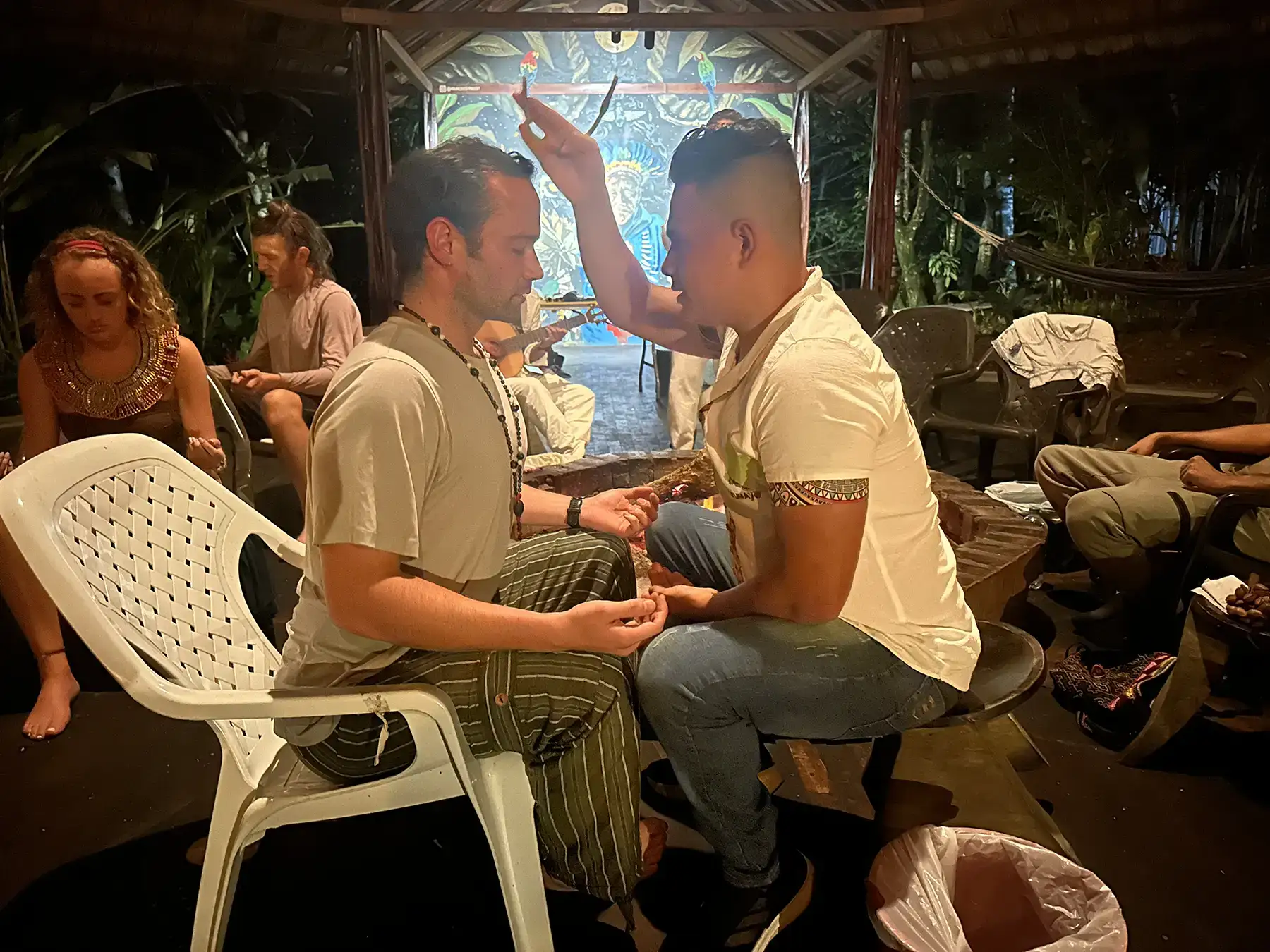
Contraindications:
- Cardiovascular disease or hypertension: nicotine transiently elevates blood pressure (Wolk et al., 2005)
- Pregnancy: tobacco and nicotine are contraindicated; this is a hard no
- Active psychiatric conditions: particularly psychosis, severe anxiety disorders, or acute depression
- Under 18: rapé is a tobacco product; sale to minors is illegal in most jurisdictions
- Combination with alcohol: increases nausea and unpredictability; not recommended
- Liver conditions: relevant given the alkaloid load in some blends
Is Hapé Legal? US, UK and International Status
Rapé’s legal status is more straightforward than most people expect, but one nuance is worth understanding before purchasing or travelling with it.
In the United States, rapé is not scheduled by the Drug Enforcement Administration as a controlled substance. It is regulated as a tobacco product, legal to possess and use by adults 18 and older, subject to the same tobacco product laws that govern other snuff and smokeless tobacco products. The important nuance: a small number of specialty rapé blends incorporate botanicals that carry their own legal complexity. Paricá (Anadenanthera peregrina), for example, contains bufotenine, which is a Schedule I substance in the United States. Blends in which Paricá constitutes a primary active ingredient rather than a minor botanical addition could in principle attract regulatory scrutiny. This is not the typical situation for standard hapé preparations, but it is relevant for anyone sourcing blends with unusual botanical profiles. The DEA non-scheduling of rapé as a category reflects its classification as a traditional tobacco product. As long as the primary ingredients are tobacco and plant ash, it remains within that regulatory framework. Verify this against current federal and local law before purchasing or travelling internationally with rapé.UK and EU:
In the United Kingdom and across the European Union, rapé is treated as a tobacco or herbal nasal snuff product rather than as a controlled substance. The UK Tobacco and Related Products Regulations apply. Age restrictions apply. Individual EU member states may impose additional restrictions on import quantities or the sale of tobacco products without tax stamps. Check the specific regulations of any destination country before travelling with hapé.Types of Rapé: Tribal Hapé Blends and How to Choose
The blend you work with is not a personal style preference. It is a choice about which tradition and which intention you are bringing into your practice.
Every traditional rapé blend reflects the specific botanical knowledge, ceremonial purpose, and intention of the tribe that makes it. The Yawanawá Tsunu blend is not interchangeable with Katukina Murici, any more than one medicinal plant is interchangeable with another. The different types of rapé available today trace directly to specific tribal lineages, each with its own ash plants, additional botanicals, and intended ceremonial function. Here is an overview:| Tribe | Blend | Key Ash / Plant | Primary Effect | Best For |
|---|---|---|---|---|
| Yawanawá | Tsunu | Platycyamus regnellii | Grounding, centering | Meditation, ceremony preparation |
| Katukina | Paricá | Anadenanthera peregrina | Energising, clarity | Deep ceremony, focus work |
| Katukina | Murici | Byrsonima crassifolia | Lung clearing, uplifting | Emotional clearing, post-illness |
| Huni Kuin | Mulateiro | Mulateiro bark ash | Upper focus, concentration | Spiritual work, prayer |
| Nukini | Pitaíca | Herbal blend, women-made | Gentle, meditative | Daily meditation, beginners |
| Apurinã | Verde / Awiry | No tobacco, no ash | Feminine, rare | Specific ceremonial use only |
| Kuntanawa | Chamba blend | Chamba plant | Protective, resilient | Clearing panema, heaviness |
| Shanenawa | Caneleiro | Sweet-scented botanicals | Balanced, soothing | Healing, gentle daily use |
Frequently Asked Questions
Rapé
- What does rapé mean?Rapé is the Portuguese word for snuff. In the context of Amazonian indigenous tradition it refers specifically to a sacred ceremonial snuff made from Nicotiana rustica tobacco and medicinal plant ash, used by tribes including the Yawanawá, Huni Kuin, and Katukina for spiritual grounding, mental clarity, and ceremonial healing. It is pronounced ha-pay.
- What is rapé (hapé)?Rapé, also written hapé, hape, or rapeh, is a finely powdered nasal snuff made from mapacho tobacco and the ash of specific sacred trees. It is administered through a small pipe called a kuripe (self-use) or tepi (by another person). It is not a psychedelic and does not produce visions. It is used for grounding, mental clarity, energetic cleansing, and as a preparation medicine in plant medicine ceremony.
- What is the difference between rapé and hapé?There is no difference. Rapé and hapé are two transliterations of the same medicine. Rapé is the original Portuguese spelling; hapé is the most common English phonetic version. Other spellings, hape, rapeh, rapéh, rappe, all refer to the same sacred Amazonian preparation.
- Does rapé contain nicotine?Yes. Most rapé blends are based on Nicotiana rustica (mapacho), which carries a significantly higher nicotine concentration than commercial cigarette tobacco. A 2015 CDC study (Stanfill et al., PMC5704902) measured nicotine levels of 6.32 to 47.6 mg/g across 14 rapé products. Anyone with cardiovascular conditions or concerns about nicotine should consult a medical professional before using rapé or hapé.
- Is hapé legal in the US?Yes, rapé and hapé are currently legal to possess and use in the United States. Neither is scheduled by the DEA as a controlled substance. Both are regulated as tobacco products, with standard age restrictions applying (18+). Individual blends containing scheduled botanical ingredients may carry a different legal profile. Always verify current local regulations before purchasing or travelling with rapé.
- How long do the effects of rapé last?The initial intense sensation typically peaks within two to five minutes of administration. A sense of grounding, mental clarity, and stillness can persist for 30 minutes to several hours, depending on the blend, the dose, and individual sensitivity.
- Who should not use rapé or hapé?Rapé should not be used during pregnancy, by anyone with cardiovascular disease or high blood pressure, or in combination with alcohol. It is a tobacco product and should not be used by anyone under 18. Individuals with active psychiatric conditions should consult a healthcare provider before any involvement with rapé, hapé, or other plant medicines.
- What is a kuripe and how is it used?A kuripe is a small V-shaped pipe, traditionally made from bamboo, wood, or bone, used for self-administering rapé. One end is placed in the mouth and the other at the nostril. The user blows a measured amount of powder into their own nasal passage. The tepi is a longer pipe used when another person administers the medicine.
Conclusion
Understanding what rapé is, pharmacologically and culturally, is not separate from using it respectfully. It is the same practice.
Rapé is one of the most chemically precise and culturally specific medicines in the Amazonian plant medicine tradition. It is made from particular plants, prepared through a particular process, administered through a particular ritual, and understood within a particular cosmology. None of that makes it inaccessible to people outside those traditions. What it does mean is that approaching rapé without knowledge of what you are working with is a missed opportunity at minimum and a genuine risk at most. The nicotine is real. The carcinogen classes in tobacco are real. The pharmacological intelligence of the plant is also real. These exist together. Acknowledging the safety picture and honouring the cultural depth are not in contradiction. Whether you encounter rapé at an ayahuasca retreat Colombia, in a plant medicine ceremony elsewhere, or through someone in your community who works with hapé, the quality of the relationship you build will be shaped by what you understand before you begin. Respect is not a soft concept. In this context, it is a practical one.References
Berlowitz, I., Torres, E.G., Walt, H., Wolf, U., Maake, C., Martin-Soelch, C. (2020). Tobacco Is the Chief Medicinal Plant in My Work: Therapeutic Uses of Tobacco in Peruvian Amazonian Medicine. Frontiers in Pharmacology, 11, 594591. https://pmc.ncbi.nlm.nih.gov/articles/PMC7576958/
Berlowitz, I., Kunz, S., Martin-Soelch, C. (2024). Exploring the Therapeutic Potential of Traditional Amazonian Tobacco Ceremonies: A Pre-Post Study. Health Education & Behavior. https://pmc.ncbi.nlm.nih.gov/articles/PMC11566090/
Berlowitz, I., Montalbán, R.M., Torres, E.G., Wolf, U., Maake, C., Martin-Soelch, C. (2023). A Case Study of Amazonian Tobacco as Treatment for Mood, Attentional, and Anxiety Disorder. Plants (Basel), 12(2), 346. https://pmc.ncbi.nlm.nih.gov/articles/PMC9863029/
Charlton, A. (2004). Medicinal uses of tobacco in history. Journal of the Royal Society of Medicine, 97(6), 292-296. https://pmc.ncbi.nlm.nih.gov/articles/PMC1079499/
de Smet, P.A. (1985). A multidisciplinary overview of intoxicating snuff rituals in the western hemisphere. Journal of Ethnopharmacology, 13(1), 3-49. https://pubmed.ncbi.nlm.nih.gov/3887041/
Miller, M.J., Albarracin-Jordan, J., Moore, C., Capriles, J.M. (2019). Chemical evidence for the use of multiple psychotropic plants in a 1,000-year-old ritual bundle from South America. PNAS, 116(23), 11207-11212. https://pmc.ncbi.nlm.nih.gov/articles/PMC6561276/
Russell, A., Rahman, E. (eds.) (2015). The Master Plant: Tobacco in Lowland South America. Routledge. ISBN 9781350007390. https://www.routledge.com/The-Master-Plant-Tobacco-in-Lowland-South-America/Russell-Rahman/p/book/9781350007390
Santos, G.M., Soares, G.H. (2015). Rapé and shamanism among indigenous groups of the Middle Purus River. Amazônica: Revista de Antropologia, UFPA. http://periodicos.ufpa.br/index.php/amazonica/article/view/2148
Schultes, R.E. (1984). Fifteen years of study of psychoactive snuffs of South America: 1967-1982. Journal of Ethnopharmacology, 11(1), 99-111. https://pubmed.ncbi.nlm.nih.gov/6381887/
Shamanic Supply. (2025). What Is Rapé (Hapé) Medicine? Benefits and How-To. https://shamanicsupply.com/pages/what-is-rapeh
Stanfill, S.B., Oliveira da Silva, A.L., Lisko, J.G., et al. (2015). Comprehensive Chemical Characterization of Rapé Tobacco Products. Food and Chemical Toxicology, 82, 50-58. CDC/PMC5704902. https://pmc.ncbi.nlm.nih.gov/articles/PMC5704902/
Wilbert, J. (1987). Tobacco and Shamanism in South America. Yale University Press. https://archive.org/details/tobaccoshamanism0000wilb
WHO International Agency for Research on Cancer. (2007). Smokeless Tobacco and Some Tobacco-specific N-Nitrosamines. IARC Monographs Vol. 89. https://www.ncbi.nlm.nih.gov/books/NBK326497/
Wolk, R., Shamsuzzaman, A.S., Somers, V.K. (2005). Obesity, sleep apnea, and hypertension. Hypertension, 46(2), 279-284.
Domino, E.F. (2000). Nicotine effects on the CNS. Drug and Alcohol Dependence.
Cryer, P.E. (1976). Physiology and pathophysiology of the human sympathoadrenal neuroendocrine system. New England Journal of Medicine, 303, 436-444.
Pavia, C.S., Pierre, A., Nowakowski, J. (2000). Antimicrobial activity of nicotine against a spectrum of bacterial and fungal pathogens. Journal of Medical Microbiology, 49(7), 675-676.
Herraiz, T., Chaparro, C. (2005). Human monoamine oxidase is inhibited by tobacco smoke: beta-carboline alkaloids act as potent and reversible inhibitors. Biochemical and Biophysical Research Communications, 326(2), 378-386.
