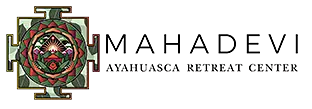
Ayahuasca and the Heart: Cardiovascular Risks, Safety, and Who Should Avoid It
| Effect | Healthy adult | Pre-existing cardiac risk | Action |
|---|---|---|---|
| Heart rate rise | +9 to +26 bpm, transient | Can trigger arrhythmia | Cardiology screen |
| Blood pressure rise | +10 to +35 mmHg systolic | Hypertensive crisis risk | Baseline BP control |
| MAOI drug interaction | Avoidable with screening | Severe with cardiac drugs | Full medication review |
| Duration of cardiac load | Returns to baseline by ~4 hours | Same window, higher cost | Monitored setting |
Ayahuasca is not a stimulant in the way coffee or amphetamine is, but it acts on the cardiovascular system through several mechanisms at once. The β-carboline alkaloids in the vine inhibit monoamine oxidase, the enzyme that breaks down catecholamines like norepinephrine and epinephrine (Egger et al., 2024). DMT in the leaf activates serotonin 5-HT2A receptors, including those on vascular smooth muscle. Combined, the two mechanisms produce sympathetic activation: the heart works harder, the vessels constrict, the pressure rises. For most healthy drinkers the effect is brief and benign. For the population this article is written for, it is the most important pharmacology in the brew.
Ayahuasca and the Heart: How the Brew Affects the Cardiovascular System
The brew works on the heart in two languages at once. One is enzymatic. The other is receptor-level. Both matter.
DMT, the psychoactive compound in the leaf, would not survive a trip through your stomach on its own. Stomach and liver enzymes called monoamine oxidase A (MAO-A) break it down before it ever reaches the bloodstream. The vine in the brew (Banisteriopsis caapi) carries β-carbolines, mainly harmine, harmaline, and tetrahydroharmine, which inhibit MAO-A long enough for DMT to get through and reach the brain (Egger et al., 2024; Ruffell et al., 2020). That is the elegant pharmacology that makes oral ayahuasca work at all. It is also the pharmacology that puts pressure on the heart.
Briefly, what is ayahuasca? A traditional Amazonian decoction of B. caapi and a DMT-containing admixture, usually Psychotria viridis in Peru and Diplopterys cabrerana (chaliponga) in Colombian yagé traditions (Brito-da-Costa et al., 2020). For a fuller introduction to the plant, the brew, and its lineages, see our overview of ayahuasca. This article assumes you have the basics and want to understand what the medicine actually does to your cardiovascular system.
The mechanism the heart cares about is twofold. First, MAO-A is the same enzyme that clears norepinephrine and epinephrine from the synapse. Inhibit it, and those catecholamines accumulate. Sympathetic tone rises. The body reads this as mild fight-or-flight, and the heart responds the way it always responds to fight-or-flight: it speeds up and the vessels tighten. Second, DMT itself is a potent agonist at serotonin 5-HT2A receptors, which are present on vascular smooth muscle and cause vasoconstriction when activated.
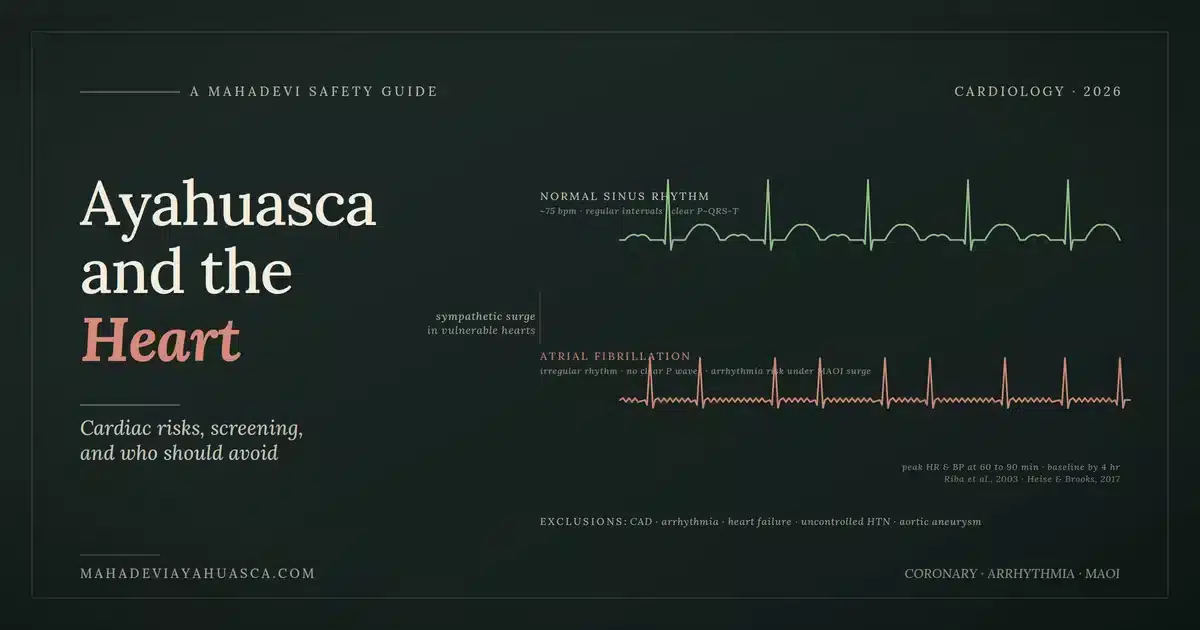
The result, in published clinical pharmacology, is heart rate and blood pressure both rising during the experience. The effects peak in the first 60 to 90 minutes after dosing. They resolve by about four hours, in line with the duration of the experience itself (Riba et al., 2003). The Riba trial found only the diastolic component reached statistical significance, with systolic and heart-rate increases described as moderate and non-significant. For a healthy adult sitting in a controlled ceremony, the cardiovascular load is comparable to moderate exercise. For someone with a sick heart, the same load can be the trigger for something worse.
The Main Heart Risks of Ayahuasca
The cardiovascular signal in the literature is consistent. The first double-blind placebo-controlled study of ayahuasca pharmacology in humans found a statistically significant diastolic blood pressure rise of about 9 mmHg above placebo at 75 minutes after the high dose. The same trial reported moderate but non-significant rises in systolic pressure and heart rate, with all values returning to baseline by four hours (Riba et al., 2003). Larger effects have been reported in less-controlled settings. A pharmacology review summarizing ceremonial ayahuasca described acute systolic rises around 35 mmHg and pulse rises of about 26 bpm in some participants, declining with repeated use (Frecska et al., 2016).
The most useful real-world dataset comes from US poison control. Between 2005 and 2015, US Poison Control Centers received 531 ayahuasca-related calls. Of those, 337 (63 percent) reported moderate or major clinical effects. Tachycardia was the single most common physiological finding (34 percent), followed by hypertension (16 percent). Forty-one cases (7 percent) were classified as major; 92 (17 percent) required ICU admission; four cardiac arrests, seven respiratory arrests, twelve seizures, and three fatalities were reported in that decade-long window (Heise & Brooks, 2017).
Those numbers should be read with care. Calls to poison control are by definition calls when something has gone wrong. They are not denominators. The Global Ayahuasca Survey, with 10,836 participants across more than fifty countries, found that only 2.3 percent of users required medical attention for an adverse event (Bouso et al., 2022). Ayahuasca, taken in a setting that screens out high-risk drinkers, is not a high-mortality compound. The signal that matters here is who the 2.3 percent are. The literature points consistently to two predictors of bad cardiovascular outcomes: pre-existing cardiac disease, and unscreened drug interactions.
Can Ayahuasca Cause a Heart Attack?
The honest answer is rarely, but yes, in people whose hearts were already at risk.
Direct case reports of myocardial infarction caused by ayahuasca alone are uncommon. The published literature contains a small number of cardiac arrest and serious cardiovascular events, mostly clustered in cases involving polypharmacy, undisclosed drug interactions, or pre-existing cardiac pathology (Heise & Brooks, 2017; Malcolm & Lee, 2018). A systematic toxicity review of ayahuasca and DMT through 2024 concluded that serious adverse events in healthy populations under controlled settings are rare, but flagged co-administration with certain medications as a clear amplifier of risk (White et al., 2024).
The mechanism by which ayahuasca could plausibly precipitate a cardiac event is not mysterious. A patient with significant coronary artery disease has a heart that already struggles to meet oxygen demand. A 30 mmHg blood pressure rise plus a 25 bpm heart rate rise lasting ninety minutes is, for that patient, a stress test administered without warning by a layperson with no defibrillator in the room. The same applies to someone with structural heart disease, an unstable arrhythmia, or recent cardiac surgery. The brew did not cause the underlying disease. It was the trigger that the underlying disease was waiting for.
The U.S. Embassy in Lima issued a 2025 health alert citing several U.S. citizen deaths or severe illness following ayahuasca consumption in Peru in 2024 (U.S. Embassy Lima, 2025). Not all of those were cardiac, but the alert is a reminder that the safety record cited in clinical trials does not transfer cleanly to unscreened tourist retreats run by operators with no medical infrastructure. For comparative cardiovascular profiles across ibogaine, San Pedro, and other ceremonial medicines, see our plant medicine overview.
Ayahuasca and Blood Pressure: What Studies Show
Blood pressure under ayahuasca rises in most drinkers. How much it rises depends on dose, on the individual, and on whether the drinker has previously been exposed to the brew. In the Riba RCT, only the diastolic rise of about 9 mmHg above placebo at 75 minutes reached statistical significance; the parallel systolic and heart-rate rises were reported as moderate and non-significant. All values returned to baseline by the four-hour mark. A Frecska review of ceremonial use reported larger acute changes in some participants, with systolic rises around 35 mmHg and heart rate rises of about 26 bpm, attenuating over repeated sessions (Frecska et al., 2016). For the dedicated guide on managing the blood-pressure question, see ayahuasca and blood pressure.
For someone with controlled stage-1 hypertension and no other cardiovascular pathology, those numbers are within tolerable range. For someone with stage-2 or stage-3 hypertension, an aortic aneurysm, hemorrhagic stroke history, or a recent intracranial event, the same rise is genuinely dangerous. Clinical guidelines from researchers working in supervised ayahuasca settings list serious hypertension as a direct exclusion criterion (ICEERS, 2019; Rossi et al., 2023). The reason is straightforward. The brew does not lower blood pressure. There is no mechanism by which it could.
Heart Conditions That Make Ayahuasca Unsafe
A retreat that does not screen for these is not a retreat. It is a liability.
The cardiac contraindications that consensus harm-reduction guidelines flag for ayahuasca are not exotic. They are the conditions any cardiologist would expect to see flagged for any sympathomimetic challenge. They include:
- Coronary artery disease, recent myocardial infarction, or unstable angina. A heart with reduced oxygen reserve has nothing to spare for an extra ninety minutes of elevated work.
- Arrhythmias, including atrial fibrillation, ventricular tachycardia, and long QT syndrome. Sympathetic activation is a known arrhythmia trigger.
- Heart failure, cardiomyopathy, or significant valvular disease. The pump is already operating near its ceiling.
- Uncontrolled or severe hypertension. Baseline plus a 35 mmHg acute rise can cross into hypertensive emergency territory.
- Aortic aneurysm or recent aortic surgery. Pressure spikes are exactly the kind of stress these patients are told to avoid.
- Recent stroke, intracranial hemorrhage, or untreated cerebral aneurysm. The vessels of the brain do not distinguish between an emotional stressor and a pharmacological one.
- Pacemaker or implantable defibrillator dependency. Not an absolute exclusion, but requires specialist clearance and a medical setting.
What about a heart murmur? Most heart murmurs are benign and do not contraindicate ayahuasca. A murmur caused by significant valvular disease does. The honest answer is that the question cannot be answered without an echocardiogram and a conversation with the cardiologist who knows the murmur’s etiology. Anyone who is told a murmur is not a problem without first being asked which murmur is being told the wrong thing.
ICEERS, the International Center for Ethnobotanical Education, Research and Service, lists ayahuasca as not recommended for people with cardiovascular problems and serious hypertension, alongside the standard psychiatric and pregnancy exclusions (ICEERS, 2019; ICEERS, 2024). Clinical safety guidelines for supervised ayahuasca administration include systematic exclusion criteria and specific protocols for managing hypertensive crisis if it occurs (Rossi et al., 2023). None of this is overcautious. It is the floor.
Dangerous Drug Interactions: Heart Medications and MAOIs
The MAOI in ayahuasca is the source of most of the brew’s drug-interaction risk, and most of those interactions touch the cardiovascular system either directly or through serotonergic pathways that affect blood pressure and heart rhythm (Malcolm & Lee, 2018). The β-carbolines in B. caapi are reversible MAO-A inhibitors. They are weaker and shorter-acting than the irreversible MAOIs prescribed for treatment-resistant depression, but they are pharmacologically real, and clinically they behave like MAOIs.
The most well-documented dangerous combination is ayahuasca with selective serotonin reuptake inhibitors (SSRIs). The risk is serotonin syndrome, a potentially fatal condition involving autonomic instability, hyperthermia, and cardiovascular collapse (Callaway & Grob, 1998). A documented serotonin syndrome case occurred when fluoxetine and ayahuasca were combined (Ruffell et al., 2020). The same logic extends to SNRIs, tricyclics, trazodone, lithium, St. John’s wort, triptans, dextromethorphan, linezolid, and methadone. For the full breakdown of which agents matter, why, and what supervised washout looks like, see our SSRI and MAOI interaction guide.
For cardiac patients specifically, the medication classes that most often appear on a screening intake are below. The table is not exhaustive. It is what the prescriber and the facilitator both need to be looking at before anyone drinks anything.
| Drug class | Examples | Why it matters with ayahuasca | Action |
|---|---|---|---|
| SSRIs and SNRIs | fluoxetine, sertraline, escitalopram, venlafaxine, duloxetine | Serotonin syndrome risk, including cardiovascular collapse, with MAOI combination | Medically supervised taper and washout under prescriber guidance |
| Tricyclic antidepressants | amitriptyline, nortriptyline, imipramine | Serotonin syndrome plus additive cardiac conduction effects | Medically supervised taper |
| MAO inhibitors (prescribed) | phenelzine, tranylcypromine, selegiline | Additive MAO inhibition; severe hypertensive crisis risk | Absolute contraindication |
| Triptans | sumatriptan, rizatriptan | Serotonergic interaction; vasoconstriction stacking | Hold for at least 24 hours; discuss with prescriber |
| Stimulants | amphetamines, methylphenidate, cocaine, MDMA | Severe hypertensive crisis risk; documented fatalities with harmala-amphetamine combinations | Absolute contraindication |
| Antihypertensives | ACE inhibitors, ARBs, calcium channel blockers, diuretics | Generally not directly dangerous; pressure may still spike above target despite medication | Continue under cardiology guidance; monitor BP |
| Beta blockers | metoprolol, atenolol, propranolol | May blunt the heart rate response, but do not prevent BP spike or arrhythmia | Continue under cardiology guidance |
| Antiarrhythmics | amiodarone, flecainide, sotalol | Patient by definition has an unstable rhythm; pharmacology is high-risk | Cardiology evaluation; generally contraindicated |
| Anticoagulants | warfarin, apixaban, rivaroxaban | Not a primary interaction concern, but pressure spike on a fragile vessel matters | Disclose to facilitator; cardiology review |
| Tyramine-rich foods (MAOI dietary interaction) | aged cheese, cured meats, fermented soy, draft beer, certain wines | MAO inhibition allows tyramine to enter circulation, triggering hypertensive crisis | Standard MAOI dietary precautions for 24 to 48 hours pre and post |
Two things to understand about this table. First, the half-life of the β-carbolines is shorter than that of prescription MAOIs, which is why the conventional dietary precaution window is 24 to 48 hours rather than the two weeks recommended for irreversible MAOIs (Brito-da-Costa et al., 2020). Second, “supervised taper” never means stopping a psychiatric medication on the writer’s recommendation. It means the prescriber making the call about whether and how, with the ceremony date in view.
Pre-Ceremony Heart Screening: A Safety Checklist
A real screening process is intrusive. That is the point.
What a responsible retreat or clinical facilitator should be asking before accepting anyone with cardiovascular history is straightforward, and the absence of these questions in an intake form is itself diagnostic of the operation. Look for the following:
- A full medical questionnaire covering every diagnosis, hospitalization, and surgery, not only the ones the participant thinks are relevant.
- A complete medication list, including over-the-counter drugs, supplements, herbal preparations, and recreational use.
- Baseline blood pressure recorded over multiple readings, not a single number on the day of intake.
- An ECG for anyone over 45, anyone with a personal or family history of arrhythmia, and anyone reporting palpitations, chest pain, or syncope.
- Cardiology consultation for participants with any flagged history, with the cardiologist informed in writing of what ayahuasca is and what it does.
- A written taper schedule for any psychiatric or interacting medication, signed by the prescribing physician.
- A clear emergency response plan, including the distance to the nearest hospital, on-site medical staffing, and oxygen and emergency-medication availability for higher-risk participants (Rossi et al., 2023).
If a retreat tells a participant with a heart history that none of the above is necessary, the participant has learned something useful about that retreat. The clinical guidelines published for safe administration of ayahuasca do not treat screening as optional (Rossi et al., 2023; ICEERS, 2019). Neither should anyone considering drinking the brew with a known cardiac risk.
Warning Signs During a Ceremony: When to Get Help
The cardiovascular effects of ayahuasca are usually transient. The signs that something has crossed from expected to medical are not subtle, and any facilitator working with people who carry cardiac risk should know them by sight. The participant should know them too.
- Chest pain or chest pressure that is new, severe, or radiates to the arm, jaw, or back.
- Sustained palpitations that do not settle, especially with a sense of fluttering or skipped beats.
- Severe shortness of breath beyond the usual labored breathing of the experience.
- Syncope or near-syncope, meaning fainting or feeling about to faint, especially when standing.
- Severe headache with stiff neck, vision changes, or confusion, which can signal hypertensive crisis or hemorrhagic stroke.
- Persistent vomiting beyond the typical purga, with signs of dehydration or weakness.
- Pallor, cold sweats, or rapid heart rate that does not resolve as the experience winds down.
The protocol is not subtle either. Get the participant to a position of safety. Take vital signs if anyone present is trained to do so. Call emergency services. Do not wait for the experience to end before assessing whether something is wrong. The brew’s pharmacology peaks in the first ninety minutes, and a serious cardiovascular event is a medical emergency regardless of what realm anyone is currently in.
Feel deeply.
Show up fully.

Frequently Asked Questions
Is ayahuasca safe for the heart?
For a healthy adult heart, the cardiovascular effects of ayahuasca are real but transient. Heart rate and blood pressure rise during the first hour, sit elevated through the peak, and return to baseline by the time the experience ends. For an adult with diagnosed cardiovascular disease, an arrhythmia, or uncontrolled hypertension, the same pharmacology is not safe without cardiology clearance and a medically prepared setting. Safety is conditional, not absolute, and the condition is honest screening.
Can ayahuasca cause a heart attack?
Direct ayahuasca-induced myocardial infarction in a healthy adult is rare in the published literature. In people with significant coronary artery disease, the brew’s elevation of heart rate and blood pressure for 60 to 90 minutes can act as the trigger for an event the underlying disease was already vulnerable to. US Poison Control data from 2005 to 2015 documented four cardiac arrests and three deaths across 531 calls, mostly clustered with polypharmacy or pre-existing pathology.
Does ayahuasca raise blood pressure?
Yes, in most drinkers. The most rigorous controlled clinical trial recorded a statistically significant diastolic rise of about 9 mmHg above placebo at 75 minutes; systolic and heart-rate rises in the same study were described as moderate and non-significant. Real-world ceremonial doses produce larger acute changes in some participants, with systolic spikes reported around 35 mmHg. The effect peaks 60 to 90 minutes after dosing and returns to baseline by the four-hour mark. For someone with normal baseline pressure, this is well-tolerated. For someone with stage-2 hypertension, it is a different conversation.
Can you take ayahuasca with a heart condition?
It depends on the condition and on the rigor of the setting. Coronary artery disease, recent cardiac events, unstable arrhythmias, heart failure, severe hypertension, aortic aneurysm, and recent stroke are flagged in consensus harm-reduction guidance as conditions that contraindicate ceremonial ayahuasca use. Mild, stable, well-managed conditions may be compatible with cardiology clearance and a medically equipped setting. The only honest answer comes from a cardiologist who has been told what the brew is and what it does.
Can you do ayahuasca with a heart murmur?
Most heart murmurs are benign flow murmurs and do not contraindicate ayahuasca. Murmurs caused by significant valvular disease, hypertrophic cardiomyopathy, or congenital structural defects do. The question cannot be answered without knowing the murmur’s etiology, which requires an echocardiogram and a cardiologist’s interpretation. Anyone who is told a murmur is fine without first being asked which murmur is being given the wrong answer.
What medicines cannot be taken with ayahuasca?
The high-risk classes are SSRIs and SNRIs, tricyclic antidepressants, prescribed MAO inhibitors, triptans, stimulants including amphetamines and MDMA, lithium, St. John’s wort, dextromethorphan, linezolid, and methadone. Serotonin syndrome is the central risk. For cardiac drugs, antiarrhythmics warrant cardiology review, antihypertensives generally continue under guidance, and tyramine-rich foods should be avoided for 24 to 48 hours around dosing. A complete medication review with the prescribing physician is non-negotiable.
Who should not take ayahuasca?
Consensus harm-reduction guidance excludes people with significant cardiovascular disease, severe or uncontrolled hypertension, personal or family history of psychotic disorders or bipolar disorder, active suicidality, current pregnancy, current SSRI or other serotonergic medication use without supervised washout, and certain neurological conditions including epilepsy. The exclusion list exists because the population it covers is the population at meaningfully elevated risk. It is not overcautious; it is the floor that experienced practitioners and clinical guidelines converge on.
Does DMT affect your heart?
DMT is a serotonin 5-HT2A receptor agonist, and 5-HT2A receptors are present on vascular smooth muscle, where activation causes vasoconstriction. In smoked or vaporized DMT, the cardiovascular effect is brief because the experience itself is brief, around 15 minutes. In ayahuasca, the cardiovascular effect lasts longer because the β-carbolines extend DMT’s activity by inhibiting its breakdown, and because the MAO inhibition itself raises catecholamines independently. The net result is sustained sympathetic activation across the ceremony.
How long do the cardiovascular effects of ayahuasca last?
In the controlled Riba pharmacology trial, blood pressure and heart rate increases peaked between 60 and 90 minutes after ingestion and resolved by 240 minutes, in line with the duration of the subjective experience. Ceremonial doses can extend this window somewhat, particularly when participants drink a second cup. By the morning after the ceremony, cardiovascular parameters in healthy participants are back to baseline. The post-ceremony window is not a high-risk period for the heart in physically healthy drinkers.
Are psychedelics hard on the heart in general?
Classic serotonergic psychedelics, including ayahuasca, psilocybin, LSD, and mescaline, all produce mild to moderate sympathomimetic effects: elevated heart rate, elevated blood pressure, and 5-HT2A-mediated vasoconstriction. Ayahuasca’s cardiovascular footprint is on the higher end of the class because of the additional MAOI mechanism. MDMA carries a substantially heavier cardiovascular load than the classic psychedelics. Ibogaine, although chemically related, sits in a separate category because of its QT-prolongation risk and documented cardiac fatalities, which the classic psychedelics do not share.
Conclusion
The cardiovascular pharmacology of ayahuasca is well-described, internally consistent, and not particularly mysterious. Heart rate rises. Blood pressure rises. The rise is brief in healthy people and dangerous in people whose hearts are already at the edge of what they can do.
The literature does not support either extreme of the cultural conversation. Ayahuasca is not poison, and the published mortality is genuinely low when screening is done properly. It is also not a benign herbal infusion, and the pretense that the cardiovascular numbers are nothing to worry about is a pretense that exists only outside the medical literature.
The heart deserves the same honesty the work itself asks of the drinker. If a cardiologist needs to know, the cardiologist needs to know. If a medication needs to be tapered, the prescriber makes that call, not the facilitator and not the writer.
The medicine is real. The pressure on the heart is real. Screening is what makes the difference.
