Ayahuasca and Women: A Complete Safety Guide
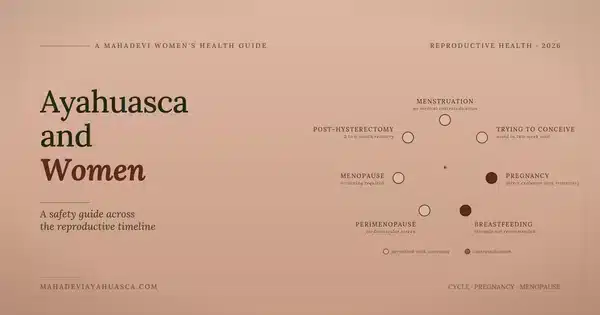
Yes, women have drunk ayahuasca for centuries, and there is no medical evidence that menstruation alone makes the brew dangerous. Reproductive state changes everything else, though. Ayahuasca is not recommended during pregnancy or breastfeeding, can interact catastrophically with SSRIs and other serotonergic medications, and stresses a cardiovascular system that may already be shifting in perimenopause. Cultural rules vary by lineage. The pharmacology does not. Most of what makes a ceremony safe or unsafe for a woman has less to do with her cycle than with her medication list, her medical history, and the facilitator she trusts with her body.
| Life stage | Medical guidance | Cultural framing | What to watch |
|---|---|---|---|
| Menstruation | No medical contraindication | Varies by lineage; some traditions exclude | Comfort, cramps, flow, pads not tampons |
| Trying to conceive | No fertility evidence of harm; avoid in two-week wait | Generally not restricted | Time ceremony before ovulation if cycling |
| Pregnancy (any trimester) | Not recommended; direct exclusion | Some Indigenous use exists but is not endorsement | Animal data shows fetal toxicity at human doses |
| Breastfeeding | Strongly not recommended | Most lineages defer until weaning | Lipid-soluble alkaloids cross into milk |
| Perimenopause | Possible with cardiovascular screening | Often welcomed | BP spikes, hot flashes, hormone therapy interactions |
| Menopause | Possible with screening | Often welcomed | Cardiovascular reserve, medication review |
| Post-hysterectomy | Possible after recovery (3 to 6 months minimum) | Generally welcomed | Surgical recovery, hormone replacement therapy |
Two molecules drive an ayahuasca ceremony, and they do not care whether the body they enter has ovaries. The body does. Below is what the published research and clinical experience suggest about how ayahuasca interacts with the female reproductive timeline, where the actual risks live, and how to think clearly about the decision a woman is making when she chooses to drink. Most of the answers women need are answers their facilitators should already be able to give them. If a facilitator cannot, that is the most useful piece of information in this article.
This article is for educational purposes only. It synthesizes published research, clinical guidance, and cultural context. It does not replace medical care. Decisions about pregnancy, breastfeeding, fertility, and any change to prescription medications require a clinician who knows your history. Decisions about ceremony participation require a facilitator who screens you properly. The information below reflects published research and clinical consensus and does not replace either.
Ayahuasca and Women: How the Brew Meets the Female Body
Female physiology does not get its own pharmacology. It does change the stakes.
The medicine is two plants. Banisteriopsis caapi, a vine. Psychotria viridis or Diplopterys cabrerana, a leaf. Boiled together, the brew contains DMT (the visionary compound) and harmala alkaloids (harmine, harmaline, tetrahydroharmine) that act as reversible MAO-A inhibitors. The MAO-A inhibition prevents the gut from breaking down the DMT, which is otherwise inactive when swallowed. That is the trick. That is why ayahuasca exists as a discovery rather than a recipe (Egger et al., 2024; Ruffell et al., 2020). For a fuller account of the brew’s pharmacology and origins, see our main ayahuasca overview.
In the body, the alkaloids do four things at once. They flood serotonin receptors, especially 5-HT2A in the cortex, which is most of where the visions come from. They inhibit MAO-A in the gut and the liver, which enables every other effect and creates the drug interaction risk. Vagal pathways activate, producing the purge that shows up as vomiting and sometimes diarrhea (Politi et al., 2022; Perkins et al., 2023). Blood pressure and heart rate rise, modestly in healthy adults but enough to matter when there is already cardiovascular strain.
In Riba’s controlled clinical study, the only statistically significant cardiovascular finding was a diastolic rise of about 9 mmHg above placebo at 75 minutes after the high dose; the parallel systolic and heart-rate rises were reported as moderate and non-significant (Riba et al., 2003). For a healthy 35-year-old, that pressure load is a tolerable acute stress. For a 55-year-old in perimenopause whose vascular tone is already shifting, or for any woman with undiagnosed hypertension, the same load is a different problem. For the dedicated guides on this topic, see ayahuasca and blood pressure and ayahuasca and the heart.
One terminology note matters specifically for women. The “ayahuasca period” is not a menstrual period. The phrase, used in some integration communities, refers to the purging phase of ceremony, when the body releases through vomiting, crying, sweating, or shaking. It has nothing to do with bleeding. A real menstrual period during ceremony is a separate event with separate considerations, covered below.
What female physiology actually changes is the surrounding context. A woman’s hormonal state, her cycle phase, her medication list including hormonal contraception, her cardiovascular reserve, and her reproductive history all shape how her body absorbs, distributes, and responds to the brew. The molecule does not care whether the body it enters has ovaries. The body does.
Ayahuasca and the Menstrual Cycle
There is no medical reason menstruation alone makes ayahuasca dangerous. There are several cultural reasons women have been told otherwise.
In every published clinical study of ayahuasca’s pharmacology and acute safety, no adverse effect has been linked to the menstrual phase of the cycle (Bouso et al., 2022; Riba et al., 2003). Bleeding does not interact with DMT, with harmala alkaloids, or with the cardiovascular response. A woman drinking on the second day of her period faces the same pharmacology as a woman drinking during the luteal phase. The blood is not the issue.
The cultural picture is more layered. In several Amazonian lineages, menstruating women are asked not to attend ceremony. The rules vary by tradition, by maestro, and by region. Some Shipibo communities exclude menstruating women from group ceremony. Colombian yagé taitas in several regions observe similar restrictions (Ramírez de Jara & Pinzón Castaño, 1993). Brazilian Santo Daime works generally do not. The reasoning given is usually energetic, not medical: the menstrual flow has its own movement of force, mixing it with the brew’s force creates interference, the woman is already doing one kind of work and ceremony adds another.
Two true things sit beside each other. The medical evidence supports drinking on a period. The cultural traditions of some lineages do not. Both are real. A woman attending a ceremony in a tradition that excludes menstruation should know in advance and decide whether she wants to attend a tradition with that rule, find a facilitator whose lineage allows it, or come at a different time. There is no universally right answer. There is only the woman’s informed call.
Post-ceremony cycle changes are common and worth understanding. Women report a wide range: earlier or heavier periods, skipped cycles, spotting, returning regularity in previously irregular cycles. These reports are common enough that no facilitator with experience is surprised by them, and no rigorous study has measured them systematically. The likely mechanisms involve the cardiovascular and somatic stress of ceremony, the hormonal sensitivity of the cycle to acute physiological events, and broader nervous-system shifts that ceremony produces. None of which makes the changes pathological. Most resolve within a cycle or two.
If a cycle change persists more than three months after ceremony, it warrants the same workup any post-stress menstrual irregularity warrants. Hormonal panel, thyroid, pregnancy test if relevant. Ayahuasca is not a privileged cause to hide behind.
The practical question most women bring is whether to attend ceremony during their period at all. The honest answer: medically yes, culturally check, personally up to you. Comfort matters. Cramps make a four-hour ceremony harder. Heavy bleeding makes the physical setting harder. Pads work better than tampons in long ceremony, both because of the duration and because some traditions restrict tampons on the same energetic logic. Tell the facilitator in advance. A facilitator who cannot handle the conversation is not the facilitator you want.
Ayahuasca and Pregnancy: What the Research Shows
The recommendation is unambiguous. Ayahuasca is not for pregnant women.
The animal data is the clearest part of the picture. In a 2018 study of pregnant rats, doses at four times the typical human ceremonial dose produced 44 to 52 percent maternal mortality, kidney injury, and neuronal loss. At one to two times the human dose, the rats showed dose-dependent embryolethality, fetal soft-tissue anomalies, and skeletal anomalies. The study’s no-observed-adverse-effect level for maternal toxicity was one times the human dose, meaning the threshold sat at the dose women actually drink (Motta et al., 2018). An earlier study in pregnant Wistar rats reached the same direction with different specifics: visceral fetal findings at all doses tested, skeletal findings at higher doses, and reduced fetal body weight at the highest dose (Oliveira et al., 2010).
Animal data does not perfectly translate to humans. But for pregnancy, where the cost of a wrong call is birth defects or fetal loss, the bar is set deliberately high. A 2024 systematic toxicity review concluded that animal models at higher doses show abortifacient and teratogenic effects, with harmaline carrying the most preclinical toxicity concerns (White et al., 2024). The International Center for Ethnobotanical Education, Research and Service lists pregnancy as a direct exclusion criterion in its best-practices guide (ICEERS, 2019).
There is a separate Indigenous-use literature that complicates the picture without overturning it. In some lineages, women have drunk ayahuasca during pregnancy under specific guidance. In some Brazilian Santo Daime contexts, pregnant members have continued ceremony participation. Small observational reports have not always detected obvious harm. None of this constitutes evidence that ayahuasca is safe in pregnancy. It demonstrates that some women have done it and some have not had the worst outcomes, which is a different statement.
The trimester matters less than people sometimes hope. First-trimester exposure overlaps with major organ development, which is the highest-risk window for teratogenic events. Second-trimester exposure carries lower but real risk to fetal neurodevelopment. Third-trimester exposure adds risks of preterm labor and cardiovascular strain on a body already supporting a near-term fetus. Across all three, the recommendation is the same: not now.
Fertility is a related question with a different answer. There is no good evidence that ayahuasca harms long-term fertility or causes lasting reproductive problems in women trying to conceive, though the data is limited and almost entirely observational. Women who have stopped drinking after a season of work have gone on to conceive without obvious issue. The practical recommendation, when actively trying to conceive, is to take ceremony at a time you are not in a two-week wait.
Postpartum is its own category. Some retreats and integration practitioners working with postpartum depression are exploring careful, post-weaning, medically supervised approaches. The literature is small. Postpartum women on antidepressants face the same SSRI interaction risk as anyone else, and a postpartum body recovering from birth should not be treated like a non-postpartum body. Postpartum is not a green light. It is a longer conversation.
Ayahuasca and Breastfeeding
If pregnancy is a clear no, breastfeeding is a clear pause.
DMT and the harmala alkaloids are small, lipid-soluble molecules. In pharmacology, those properties predict transfer into breast milk at concentrations that depend on plasma levels and lipid partitioning. There are no published human studies measuring DMT or harmine in breastfeeding women’s milk. The prediction is extrapolated from drug class behavior, and the prediction is that the alkaloids do cross.
A nursing infant exposed to ayahuasca alkaloids through breast milk faces a body that lacks the metabolic enzymes a healthy adult uses to clear them. Infant livers are immature. The blood-brain barrier in infants is more permeable than in adults. The combination of high lipid solubility, immature clearance, and a permeable barrier is the worst-case profile for any psychoactive substance, which is why every mainstream lactation guideline that addresses psychedelics defaults to abstention or temporary cessation of breastfeeding.
The “pump and dump” approach has limits worth naming. Pumping and discarding milk does remove milk from the breast, but it does not accelerate the clearance of alkaloids from the body’s other compartments. The half-lives of DMT and the harmala alkaloids in humans are not perfectly characterized but appear to range from one to several hours for DMT and somewhat longer for harmine and tetrahydroharmine (Brito-da-Costa et al., 2020). The general lactation pharmacology rule is to wait roughly five half-lives for clearance, which for ayahuasca alkaloids means a minimum of 24 to 48 hours of pumping and discarding before resuming breastfeeding, and likely longer for the slower-clearing β-carbolines. For the cautious mother, weaning before ceremony is the simpler call.
What about scheduled ceremony at a known weaning point? That is a real conversation to have with both an integration practitioner and a lactation consultant. Some women time a ceremony around natural weaning, planning ceremony work for after the child has fully transitioned to other nutrition. That timing avoids the breast-milk question entirely. Others choose to interrupt nursing with several days of formula or stored milk and resume after a clearance window. The latter approach carries more risk and demands more rigor in screening, dosing, and timing.
The decision belongs to the woman. The information should not be hidden from her. A retreat or facilitator who cannot have a sober conversation about lactation pharmacokinetics is signaling something important about their seriousness. Ask. The right answer to “what about breastfeeding?” is not a vague reassurance. It is a specific framework for thinking through clearance, infant exposure, and timing, with appropriate humility about the gaps.
Ayahuasca in Perimenopause and Menopause
The transition that ends fertility is also the transition that ends some old protections.
A woman in perimenopause is moving through hormonal shifts that affect cardiovascular reserve. Estrogen, long understood to provide some vascular protection in premenopausal women, declines unevenly across perimenopause and more steadily through menopause. The clinical consequence is increased baseline cardiovascular risk. Blood pressure tends to rise. Vascular flexibility tends to decrease. The same dose that produced a modest cardiovascular response in healthy younger adults in the Riba RCT (Riba et al., 2003) lands on a system with less reserve. The pharmacology does not change. The capacity to absorb it does.
This is the most overlooked physical consideration in midlife ayahuasca use. Women drinking in their late forties, fifties, and sixties, often coming to the medicine for the first time and often coming to it to address depression, grief, or the meaning-of-life questions that midlife brings, are bringing a cardiovascular system that deserves screening. A standard screen includes a baseline blood pressure check, a review of family cardiovascular history, and ideally a recent EKG if there is any indication. None of this is exotic. It is what a careful facilitator should ask anyway.
Beyond cardiovascular, the therapeutic interest in psychedelics for midlife depression has grown rapidly. A 2024 meta-analysis of psychedelics for mental disorders found ayahuasca produced large effects on depression and anxiety, second only to psilocybin (Yao et al., 2024). Women in perimenopause and early menopause are heavily represented in the populations seeking treatment-resistant depression therapies, which is part of why this question is asked so often. For the full picture of the depression evidence, see our companion guide on ayahuasca for depression. The evidence is real. The screening still applies.
A short note on hormone therapy. Women on oral or transdermal estrogen replacement, progestin therapy, or combination hormonal therapy do not face the same SSRI-style interaction risk that comes from MAOI plus serotonergic medication. Sex hormones and MAO-A do not interact in the same dangerous direction. The interaction profile that does matter is hormonal therapy that affects clotting, cardiovascular function, or psychiatric medication regimens that often accompany hormone therapy. Disclose every medication. Let a screening clinician make the assessment.
Hot flashes during ceremony are common for perimenopausal women, both because the body’s thermoregulation is already shifting and because the autonomic stress of ceremony can amplify the underlying instability. Bringing extra water, layered clothing, and a willingness to leave the ceremony room briefly if needed is a reasonable plan. None of this should disqualify a woman from ceremony. It should inform how she prepares for it.
The frame that has helped many midlife women approach ayahuasca with the right ratio of openness to caution is this: the medicine is not a hormonal intervention. It is a psychological and somatic event that happens to a body whose hormones are changing. Treat both as real.
Hysterectomy, IUDs, and Other Reproductive Contexts
The literature is honest about what it has not studied. It will help if you are too.
There are no published clinical studies of ayahuasca use specifically in women post-hysterectomy. None in women with IUDs, hormonal or copper. None in women with endometriosis, polycystic ovary syndrome, fibroids, or premenstrual dysphoric disorder. What we have is pharmacology that allows reasoned extrapolation, lived reports from women who have made these decisions, and the screening logic that any responsible facilitator already applies.
For post-hysterectomy women, the specific reproductive considerations of menstruation, pregnancy, and breastfeeding are not in the picture. The cardiovascular and pharmacological considerations are unchanged. Women who have had a hysterectomy with ovaries retained continue to produce estrogen until natural menopause and should be screened on the perimenopausal frame. Women who have had a hysterectomy with oophorectomy are in surgical menopause regardless of age, with the cardiovascular implications described in the prior section. The recovery window after the surgery itself is a separate question. Most clinicians would not recommend significant cardiovascular or autonomic stress within the first three months after major abdominal surgery. Six months is more conservative and is what we generally recommend at our retreats.
For IUDs, the picture is reassuring but worth thinking through. Copper IUDs have no systemic hormonal effect and no known interaction with ayahuasca. Hormonal IUDs deliver progestin (typically levonorgestrel) at low systemic levels, with most of the effect being local to the uterus. There is no published interaction between progestin-only hormonal contraception and MAOI medications. The theoretical risk is low. The cycle effects of hormonal IUDs (lighter or absent periods, spotting) may interact with the cycle-disruption phenomena that some women report after ceremony, which is a consideration worth knowing rather than worrying about.
For endometriosis, PCOS, and fibroids, the conditions themselves are not contraindications. The medications associated with managing them sometimes are. GnRH agonists, hormonal suppressants, and the SSRIs frequently prescribed alongside chronic pelvic pain conditions all warrant careful disclosure during screening. Disclose. The whole point of screening is to make the call that protects you.
Dangers and Contraindications Every Woman Should Know
The dangerous interactions are not the ones most people are worried about.
Most women approach ayahuasca worried about the visions, the purge, or losing control. Those are real experiences, but they are rarely what causes serious harm. The interactions associated with deaths in the published literature involve specific medication classes, specific psychiatric histories, and specific cardiovascular conditions. The visions are not on that list.
The single most important contraindication is concurrent use of a serotonergic antidepressant. SSRIs, SNRIs, tricyclics, prescription monoamine oxidase inhibitors, trazodone, lithium, triptans for migraine, tramadol, dextromethorphan, methadone, and St. John’s wort all carry serious or fatal interaction risk when combined with ayahuasca’s MAO-A inhibition (Callaway & Grob, 1998; Malcolm & Lee, 2018; ICEERS, 2024). The mechanism is serotonin syndrome: the combined serotonergic load overwhelms the body’s capacity to metabolize, producing hyperthermia, muscle rigidity, seizures, and in severe cases death. Washout periods vary by medication and half-life. For most SSRIs, the standard recommendation is at least two weeks. For fluoxetine, with its long-acting metabolite, the standard is six weeks. These washouts must be planned with the prescribing physician. Do not stop a psychiatric medication on your own. For the full breakdown of agents and washouts, see our SSRI and MAOI interaction guide.
The table below summarizes the most relevant interaction categories for women considering ceremony.
| Substance class | Risk profile | Standard washout |
|---|---|---|
| SSRIs (sertraline, escitalopram, paroxetine, citalopram) | Serotonin syndrome; potentially fatal | 2 weeks minimum |
| Fluoxetine | Serotonin syndrome; long-acting metabolite | 6 weeks |
| SNRIs (venlafaxine, duloxetine) | Serotonin syndrome | 2 weeks minimum |
| Tricyclic antidepressants | Serotonin syndrome; cardiotoxicity | 2 to 3 weeks |
| MAOIs (prescription) | Hypertensive crisis; additive MAO inhibition | 2 to 4 weeks per prescriber |
| Lithium | Serotonin syndrome; neurotoxicity | Per prescriber |
| Triptans (sumatriptan etc.) | Serotonin syndrome | 24 to 48 hours per drug |
| Tramadol, dextromethorphan, methadone | Serotonin syndrome; documented fatalities | Per prescriber |
| Stimulants (amphetamines, MDMA) | Hypertensive crisis; serotonin syndrome | Avoid concurrent use |
| Tyramine-rich foods (aged cheese, cured meats, fermented) | Hypertensive reaction during MAOI window | 24 hours pre, 24 hours post |
| Hormonal contraception (oral, IUD, implant) | No documented dangerous interaction | None required |
| Hormone replacement therapy (estrogen, progestin) | No documented dangerous interaction | None required |
The second-tier contraindications are psychiatric conditions susceptible to destabilization. Schizophrenia, bipolar I disorder (particularly with a history of mania), and active psychosis are documented risk factors for adverse psychiatric events under ayahuasca (dos Santos et al., 2017; Szmulewicz et al., 2015). Family history of psychosis or bipolar disorder is a yellow flag worth disclosing. Severe untreated PTSD with active dissociation is a separate risk profile that experienced facilitators handle differently.
The third tier is cardiovascular. Uncontrolled hypertension, recent cardiac events, severe coronary artery disease, and pheochromocytoma are all reasons to defer ayahuasca. The blood pressure spikes documented in clinical trials are tolerable for healthy adults and dangerous for adults with limited cardiovascular reserve.
Numbers help calibrate the actual risk. In the 2022 Global Ayahuasca Survey of 10,836 users, acute physical adverse effects (mostly vomiting) occurred in 70 percent. Only 2.3 percent required medical attention afterward. About 56 percent reported some adverse mental health effect in the weeks following, but 88 percent of those framed the difficulty as part of a positive growth process (Bouso et al., 2022). A 2017 review of US poison control data from 2005 to 2015 found that 337 of 531 ayahuasca exposure calls reported moderate or major clinical effects, including 3 fatalities, 4 cardiac arrests, 7 respiratory arrests, 12 seizures, and 92 ICU admissions over the decade (Heise & Brooks, 2017). The U.S. Embassy in Lima issued a 2025 health alert noting that several U.S. citizens died or experienced severe adverse events at Peruvian retreats in 2024 (U.S. Embassy Lima, 2025).
The pattern in the most serious cases is consistent. Undisclosed medications. Undisclosed cardiovascular history. Untrained facilitators or facilitators who do not screen. Unsafe retreat environments. The medicine itself is part of the picture but rarely the whole story.
There is also a category of harm specific to women that needs to be named: sexual abuse during ceremony or integration. Reported cases involve charismatic male facilitators, including some celebrated lineage holders, exploiting women in profoundly altered states (Maybin & Casserly, BBC News, 2020). The risk is highest in unregulated retreats, in private one-on-one sessions, and in any setting without independent oversight. Female facilitators, mixed-gender teams, and group ceremonies with multiple staff are not absolute protection but they meaningfully change the risk profile.
Cultural Traditions, Gender, and Choosing a Facilitator
The lineage matters. The facilitator matters more.
Different lineages handle women differently. Shipibo healers (onanyabo) operating from the Ucayali in Peru include both men and women as plant doctors, though the most public master healers internationally tend to be men. Colombian yagé taitas in the Sibundoy and Putumayo regions have historically been mostly men, with mama-curacas appearing in some communities and rising in visibility recently (Ramírez de Jara & Pinzón Castaño, 1993). The Kamëntša tradition has long included women healers whose knowledge has been carried through chagra (sacred garden) practice and oral transmission (Agioutanti & Cortés, 2026). Brazilian Santo Daime has women in formal ceremonial roles, including madrinhas. The União do Vegetal includes women as full members and ritual leaders.
Across these traditions, the same dynamic recurs. Women have always been part of ayahuasca culture, but the public-facing master healer roles have skewed male, especially during the period of international expansion. That has begun to shift. More female-led ceremonies are operating internationally. Some retreats now offer women-only programs. The quality of those programs varies wildly. Female leadership is not a guarantee of safety. Male leadership is not a sentence of harm. Both require independent vetting.
A practical vetting framework that holds up: a facilitator should require a medical questionnaire before accepting you. A facilitator should ask about medications, psychiatric history, cardiovascular health, and reproductive considerations including pregnancy, breastfeeding, and ongoing trying-to-conceive. A facilitator should disclose lineage, training, and length of practice. A facilitator should be reachable for a discovery call before you commit. A facilitator should have integration support available after ceremony, not just a ride to the airport. A facilitator should be able to articulate a sober answer to drug interaction questions, not deflect. A facilitator who does not do these things is not the right facilitator, regardless of gender, regardless of marketing.
Red flags worth taking seriously: no screening process at all, dismissiveness about reproductive history or medications, mixing ayahuasca with kambo or bufo or other unrelated substances in the same retreat, no public lineage information, no integration plan, sexual or romantic invitations from a facilitator at any point before, during, or after ceremony.
The wider critique sometimes voiced in feminist psychedelic writing (Labate & Cavnar, 2021) is that the global expansion of ayahuasca has reproduced patterns of exclusion familiar from other industries: women, queer people, people of color, and indigenous peoples have been disproportionately under-represented as decision-makers in the spaces that grow up around the medicine. That critique is real and deserves attention, especially from women considering where to bring their work. The retreat you choose is also a choice about whom to support.
The right facilitator for you may not be the most famous or the most marketed. The right facilitator is the one whose screening, lineage, and follow-through inspire your trust on the specific terms that matter to a woman in the body she is in.
Feel deeply.
Show up fully.
Frequently Asked Questions
Can you drink ayahuasca on your period?
Medically, yes. There is no documented pharmacological interaction between menstruation and ayahuasca’s alkaloids. Some traditions exclude menstruating women from group ceremony for energetic reasons specific to the lineage; ask the facilitator about their tradition’s practice in advance. Comfort is a real factor: cramps, heavier flow, and fatigue can make a four-hour ceremony harder to sit through. Use pads rather than tampons if you do attend. The decision is yours, and the right facilitator will discuss it without judgment.
Is ayahuasca safe during pregnancy?
No. Animal studies show dose-dependent embryolethality and fetal anomalies at one to two times the typical human ceremonial dose, with high maternal mortality at four times that dose (Motta et al., 2018). Major safety guidelines, including those from ICEERS, list pregnancy as a direct exclusion criterion (ICEERS, 2019). The recommendation across all three trimesters is the same: not now. If you are pregnant or trying to conceive, postpone ceremony work until after the pregnancy and a clearance window appropriate to your situation.
Can you take ayahuasca while breastfeeding?
Strongly not recommended. DMT and harmala alkaloids are small, lipid-soluble molecules that almost certainly cross into breast milk, and an infant’s immature liver and permeable blood-brain barrier mean exposure carries real risk. There are no published human studies measuring concentrations. If you must do ceremony while still nursing, plan an extended pump-and-discard interval (minimum 24 to 48 hours, longer for the slower-clearing β-carbolines) or, more conservatively, time ceremony around weaning. Bring a lactation consultant into the conversation.
Can ayahuasca affect your menstrual cycle?
It can. Anecdotal reports include heavier or earlier periods, skipped cycles, and spotting in the weeks after ceremony. The likely mechanisms involve cardiovascular stress, somatic-nervous-system shifts, and the cycle’s general sensitivity to acute physiological events. Most changes resolve within one or two cycles. Persistent disruption beyond three months warrants the same workup any post-stress menstrual irregularity does, including pregnancy testing, hormonal panel, and thyroid screening. Ayahuasca is not a privileged cause to hide behind.
Does ayahuasca help with menopause symptoms?
There is no good evidence that ayahuasca specifically addresses vasomotor menopausal symptoms like hot flashes. There is growing evidence that it produces large effects on depression and anxiety, which are often heightened in perimenopause (Yao et al., 2024). Many women come to the medicine in midlife for that reason. Cardiovascular screening becomes more important in this stage of life, because estrogen-related vascular protection has declined and ayahuasca’s blood pressure response carries more weight. The therapeutic interest is real and the caution should be too.
Can a woman who has had a hysterectomy drink ayahuasca?
Yes, with the same screening any woman receives, plus attention to two things specific to post-surgical bodies. First, recovery time: most clinicians advise waiting at least three months after major abdominal surgery, and we recommend six. Second, hormonal status: a hysterectomy with retained ovaries leaves estrogen production intact until natural menopause, while a hysterectomy with oophorectomy creates surgical menopause regardless of age. Hormone replacement therapy following oophorectomy is part of the medication review during screening.
What about hormonal birth control?
Hormonal contraception does not have a documented dangerous interaction with ayahuasca’s MAO-A inhibition. Combined oral contraceptives, progestin-only pills, hormonal IUDs, and contraceptive implants are all generally compatible from a pharmacological standpoint. The facilitator screening should still know about the medication. The cycle-disruption considerations described above apply. Copper IUDs have no systemic hormonal effect and no known interaction.
How do I find a safe female-led ceremony?
Independent vetting beats branding. Ask any facilitator, regardless of gender, for medical screening processes, lineage and training disclosure, integration support, and the names of past participants willing to speak with you. Search for the facilitator’s name beyond their own marketing. Look for at least three years of consistent practice in a single lineage. Be skeptical of retreats that mix multiple psychoactive substances in a single program. Check for independent oversight: a retreat with multiple staff is harder to abuse than a one-on-one private session.
What are the most serious dangers of ayahuasca for women?
In rough order of frequency: drug interactions with serotonergic antidepressants, undisclosed cardiovascular conditions, undisclosed psychiatric conditions susceptible to destabilization, retreat settings with inadequate medical screening, and sexual misconduct from facilitators in unregulated environments (Maybin & Casserly, BBC News, 2020). The visions, the purge, and the intensity of the experience are real but rarely the source of serious harm. The pattern in nearly every documented serious adverse event involves at least one undisclosed factor or one missing safeguard.
Conclusion
A woman drinking ayahuasca is taking a body whose physiology is more layered than the standard pharmacology textbook accounts for, into a context whose history is more layered than the standard retreat brochure accounts for. Both can be navigated. Neither should be skipped over.
The medical answer to most reproductive questions is more permissive than the cultural answer in some traditions, and the cultural answer is more permissive than the medical answer in some others. The right move is to learn the specific situation you are entering, ask the questions that the facilitator should welcome, and bring your medication list and your medical history into the conversation rather than around it.
The decisions that protect you are not the dramatic ones. They are the ones made before you ever sit down: the SSRI taper planned with your prescribing physician, the cardiovascular screening before midlife ceremony, the timing chosen around pregnancy or weaning, the facilitator vetted on the specific terms that matter to a woman.
The medicine has been available to women for as long as it has existed. The conditions that make it safe are the ones you build before you drink.
References
Maybin S, Casserly J. (2020). ‘I was sexually abused by a shaman at an ayahuasca retreat’. BBC News.
