The Kamëntsá (Camsá) People and the Yagé Tradition of the Sibundoy Valley
An indigenous people of the upper Putumayo, Colombia, known for their yagé tradition, their language isolate, and the Bëtsknaté carnival.
The Kamëntsá (also written Camsá, Kamëntšá, or Kamsá) are an indigenous people of the Sibundoy Valley in the upper Putumayo of southern Colombia. Numbering around 7,000, they are best known beyond their territory for their tradition of yagé (the Colombian name for ayahuasca), for speaking a language isolate unrelated to any other known language, and for the Bëtsknaté, the "Carnival of Forgiveness." They share the Sibundoy Valley, and many cultural practices, with the neighbouring Inga people.[1][4]
Name and language
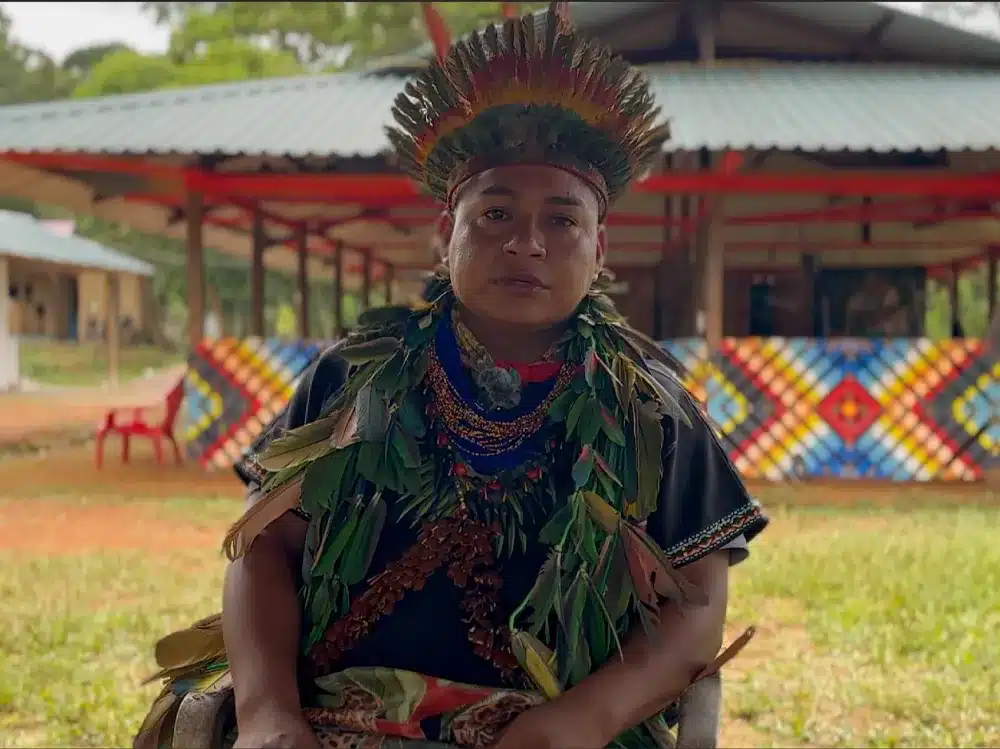
The people's name appears in many spellings, including Kamëntšá, Camëntsëá, Kamsá, and Camsá.[1] Their language, also called Kamëntsá or Camsá, is a language isolate: despite attempts to connect it to the Chibchan family, no genetic relationship to any other language has been established.[2][3] The language is endangered, under heavy pressure from Spanish, which is now the first language of much of the valley's population; its transmission to younger generations is no longer secure.[2]
Territory: the Sibundoy Valley
The Kamëntsá homeland is the Sibundoy Valley, a high valley on the Andean edge of the Amazon basin in the Alto Putumayo.[5] They have shared this valley with the Inga, a Quechuan-speaking people, for centuries, and the two groups hold many practices in common, including the celebration of the Bëtsknaté, the ceremonial use of yagé, and distinctive blue-and-red wool ponchos.[1]
The yagé tradition
Yagé is central to Kamëntsá ceremonial and medical life. Its ceremonial leaders and healers are known as taitas. Taitas maintain cultivated gardens of medicinal and visionary plants and undergo long, multi-year initiations through successive yagé visions under the guidance of senior healers.[4][6][7] The brew itself is prepared from the Banisteriopsis caapi vine combined with a DMT-bearing admixture; in the Colombian Putumayo this admixture is characteristically Diplopterys cabrerana (chagra). In addition to the conventional cooked decoction, the regional tradition includes a cold-brew preparation known as crudo. The taita's visionary work is understood to express the people's deep relationship with, and dependence upon, the natural world.[4] Within this tradition, ceremonial knowledge passes through multi-generational lineages of taitas, such as the Camsá lineage of Taita Miguel Mavisoy in Mocoa.
The Bëtsknaté (Carnival of Forgiveness)
The Bëtsknaté — variously translated as the "Great Day" (Día Grande), the "Carnival of Forgiveness" (Carnaval del Perdón), and the "Festival of Corn" — is the most important Kamëntsá celebration, held in February and shared with the Inga.[8] It marks the reception of the new year and is an act of reconciliation and of gratitude to the earth for the previous year's harvest, expressed through offerings, music, dance, shouts, and a vivid procession of costumes and feather crowns. For the community it is a spiritual cleansing: a closing of conflicts and an asking of forgiveness in order to begin again. The Bëtsknaté was declared part of Colombia's Intangible Cultural Heritage of the Nation in 2013.[8]
Material culture
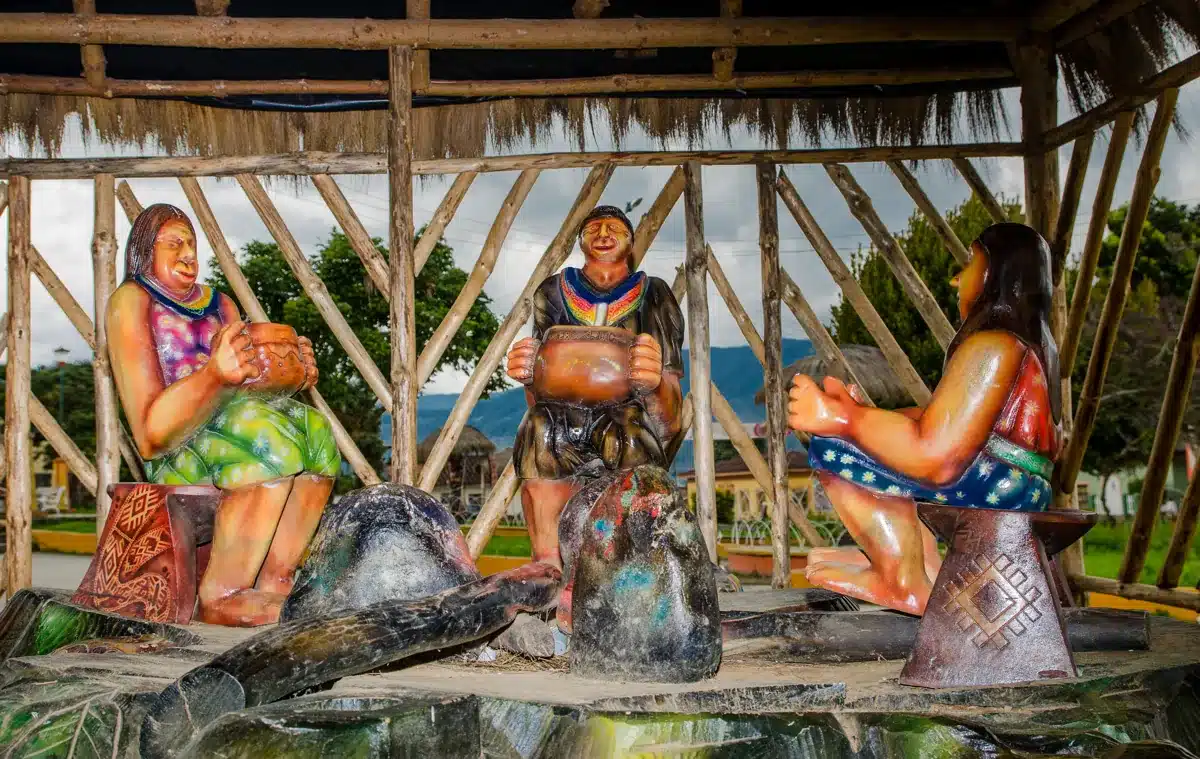
The Kamëntsá are widely recognized for their craftsmanship. They are known for carved wooden masks worn during ceremonies and festivals, as well as for painting, sculptural wood carving, and intricate beadwork that recount ancestral history and the imagery of medicine visions.[1][4] Their distinctive blue-and-red wool ponchos are a recognizable element of dress shared with the Inga.[1] Underlying this material culture is a profound respect for Pachamama, Mother Earth, and the gifts of the natural world.[4]
Contemporary situation
In 1999 the Kamëntsá, together with the Cofán, Inga, Siona, and Coreguaje, founded UMIYAC (the Union of Indigenous Yagé Healers of the Colombian Amazon) to protect the yagé tradition, its healers, and their territories.[9] Like other peoples of the region, the Kamëntsá face significant pressures, including deforestation, mining and hydroelectric projects, and the historical suppression of their language and beliefs; the broader yagé-bearing peoples of the region have been recognized by Colombia's Constitutional Court as at risk.[4][9]
See also
Crudo (cold-brew yagé) · Ayahuasca vs Yagé · Legal status of ayahuasca in Colombia · Banisteriopsis caapi (the vine)
References
- "Kamëntšá people." Wikipedia. link
- "Camsá language." Wikipedia. link
- "A Typological Sketch of Kamsá, a Language Isolate of Colombia." Forma y Función (SciELO Colombia). link
- "The Kamentsá Peoples: Keepers of the Sibundoy Valley." Intercontinental Cry. link
- "Sibundoy." Wikipedia. link
- Taussig, M. (1987). Shamanism, Colonialism, and the Wild Man: A Study in Terror and Healing. University of Chicago Press.
- Ramírez de Jara, M. C., & Pinzón Castaño, C. E. (1992). "Sibundoy Shamanism and Popular Culture in Colombia." In E. J. M. Langdon & G. Baer (eds.), Portals of Power: Shamanism in South America (pp. 287–303). University of New Mexico Press. link
- "Bëtsknaté: el Carnaval del Perdón en el Valle de Sibundoy." Radio Nacional de Colombia. link
- "The Yurayaco Declaration of UMIYAC (Unión de Médicos Indígenas Yageceros de la Amazonía Colombiana)." Ayahuasca.com. link